分类: Application guides

  • How to Qualify a Stretch-Fabric Supplier Before Bulk Orders

    How to Qualify a Stretch-Fabric Supplier Before Bulk Orders


    A new stretch-fabric supplier should be qualified through evidence: a complete specification, traceable samples, comparable test results, production and quality records, and a controlled trial order. A polished swatch or low quotation cannot show whether the supplier can reproduce stretch, shade, GSM, usable width and finishing across bulk production.

    Start With a Risk-Based Requirement

    Describe the garment, target market and failure modes before auditing the supplier. Leggings may prioritize opacity under strain and recovery; sports bras may require support, skin comfort and seam stability; running tops may prioritize low wet cling and drying behavior. The qualification plan should test the characteristics that could stop production or create returns, rather than use one generic checklist for every fabric.
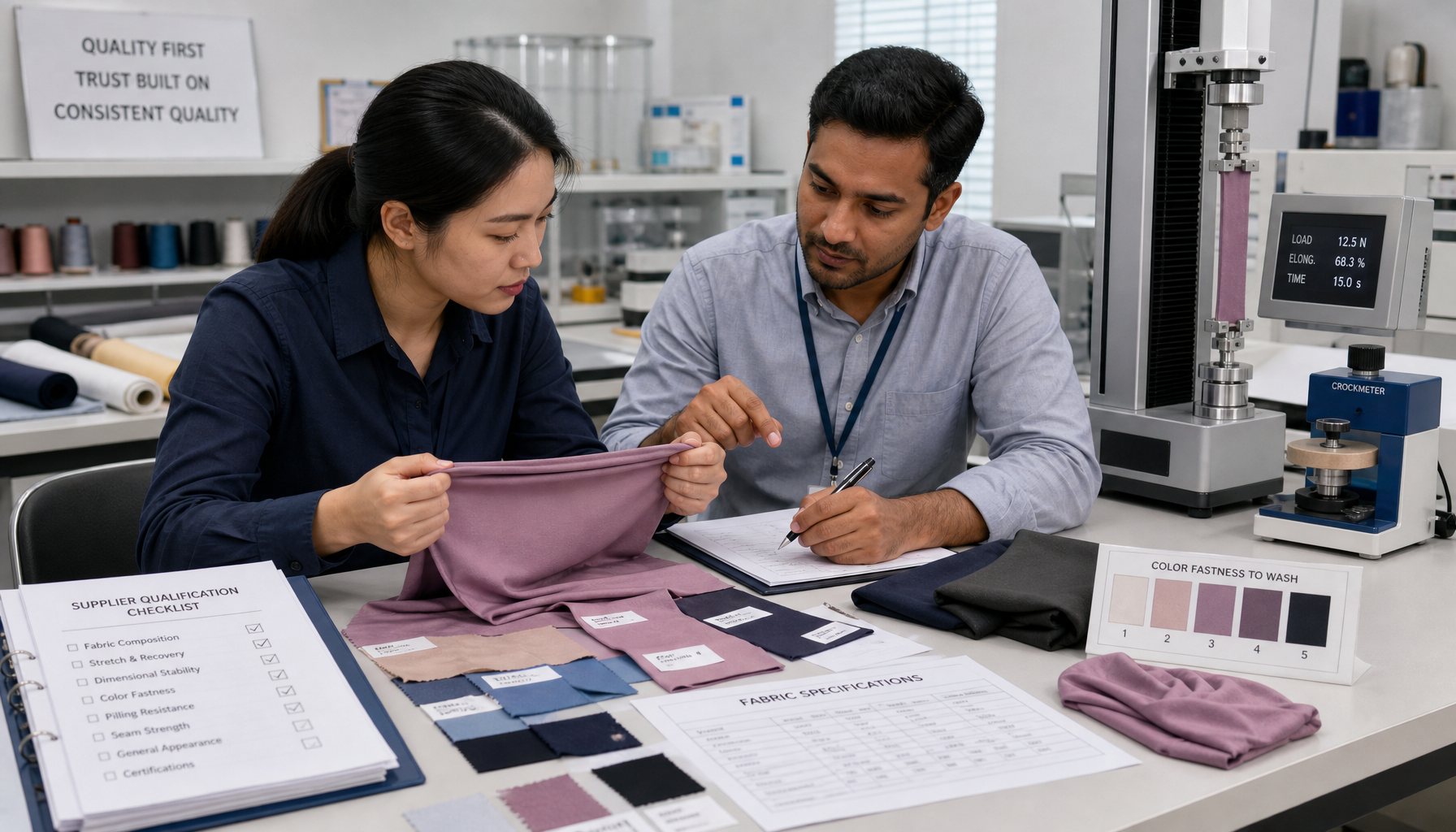
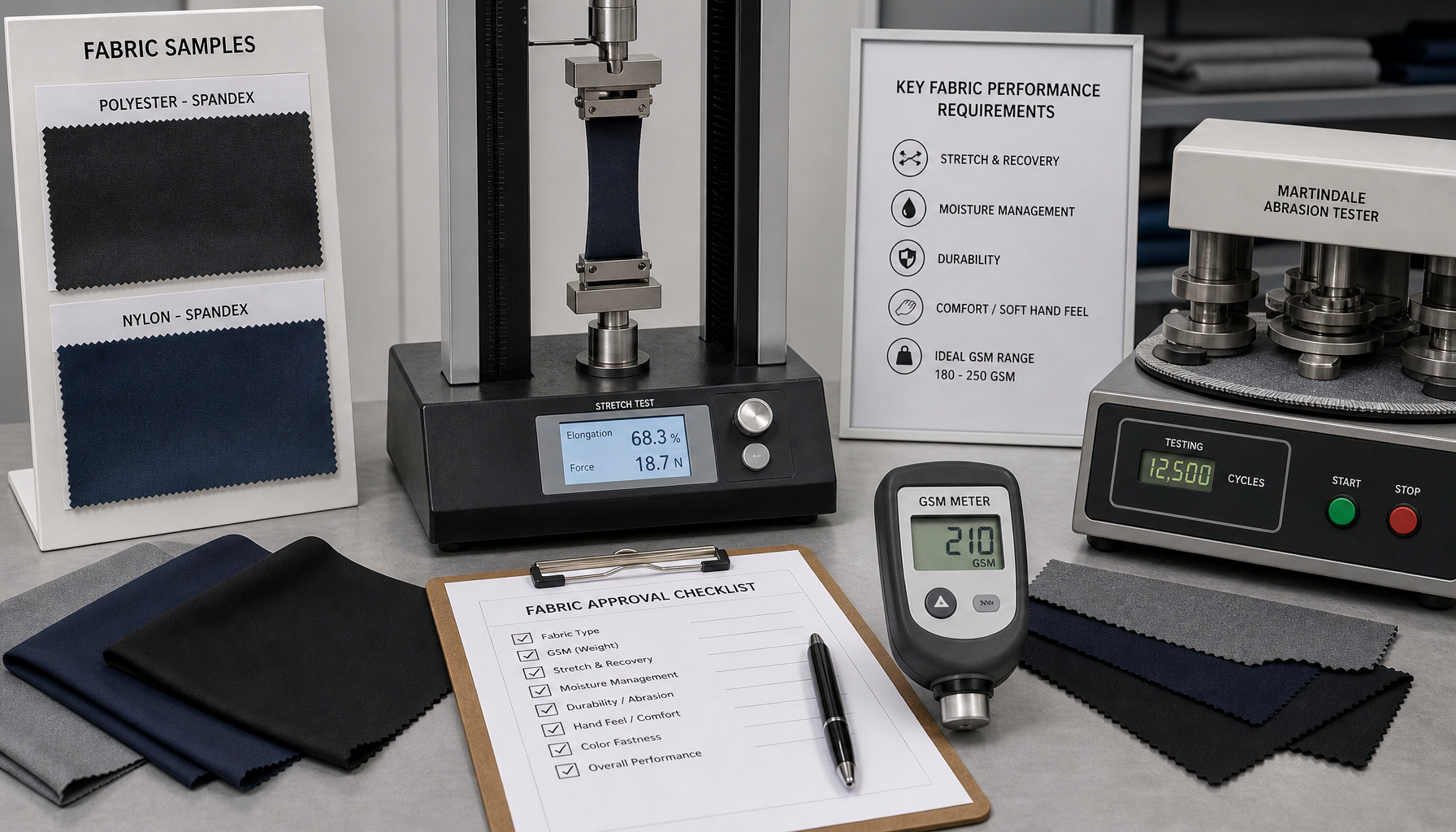
    Illustration: Stretch fabric sample and specification reviewed during supplier qualification
    Illustrative image; not a test record or production evidence.

    Verify Technical Control

    Ask how the supplier identifies yarn, knitting construction, dye lot, finishing route and inspection status. Review whether test methods, conditioning, units and acceptance limits are written rather than described as “standard.” A supplier should also explain how a bulk lot is compared with the approved sample and how nonconforming rolls are segregated, reported and dispositioned.

    Test a Representative Sample

    Request enough material for the intended evaluation, not only a presentation swatch. Confirm composition, GSM, usable width, stretch and recovery by direction, dimensional stability, colorfastness and any application-specific requirement. Sew and wash a garment prototype when fit or seam behavior is important. Optional finishes should be verified under the agreed laundering condition rather than accepted from initial hand feel.
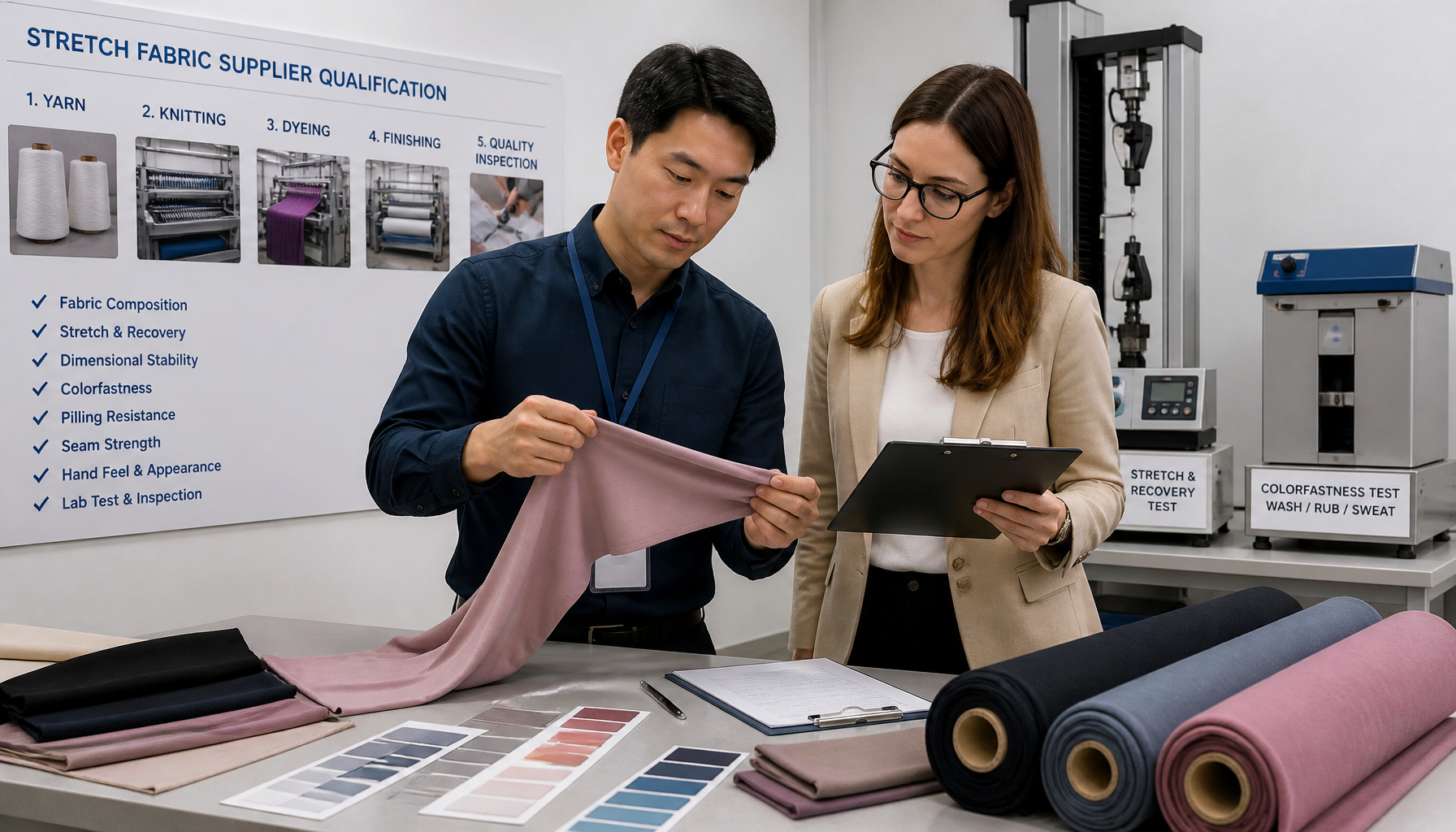
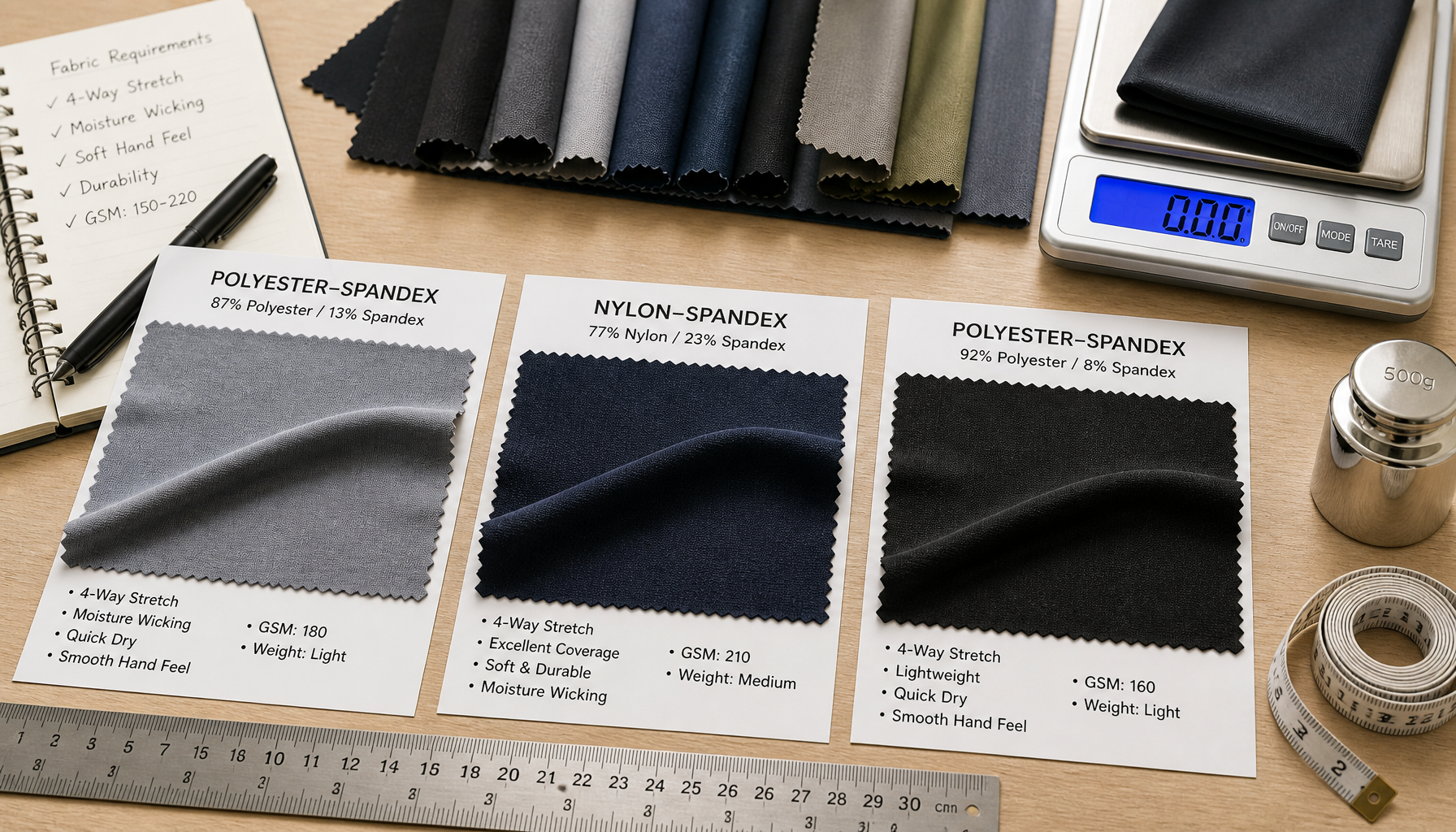
    Illustration: Supplier qualification review of fabric testing and quality records
    Illustrative image; not a test record or production evidence.

    Audit Capacity Through Records

    Do not accept an unsupported capacity statement. Ask for the production route, responsible subcontractors where applicable, current loading method, critical raw-material lead times and recent on-time performance records relevant to the requested process. The objective is not to require every operation to be owned by one company; it is to verify that responsibilities, approvals and traceability remain controlled across the actual supply chain. For the audit scope, see how a supplier capability audit affects sampling and bulk planning.

    Run a Controlled Trial Order

    A trial order should use the intended construction, color, finish and inspection plan. Define checkpoints for lab dip, production sample, bulk test report, roll inspection and shipment release. Compare actual communication time, correction handling, shade control and delivered roll data with the commitments made during qualification. Record deviations so the repeat-order decision uses evidence rather than memory. Compare commercial terms with the fabric-quote comparison before releasing the trial.

    Supplier Comparison Scorecard

    Area Evidence to request Main risk controlled
    Technical fit Signed specification and sample Wrong material selection
    Quality control Test and inspection records Bulk inconsistency
    Traceability Lot and roll identification Uncontained defects
    Delivery Dated production plan and records Launch delay
    Corrective action Nonconformance workflow Repeated failures
    Commercial terms MOQ, price basis and claims process Hidden cost

    Approval Decision

    Approve only the product and process combination that was evaluated; supplier qualification is not blanket approval for every fabric. ClothFactory should be assessed against the same written criteria as competing suppliers; request the qualification brief through the contact page. Requalify the relevant controls when construction, finishing route, production location or key raw material changes, because prior performance may no longer represent the new supply condition.
  • How to Specify Fabric for Tennis Dresses

    How to Specify Fabric for Tennis Dresses


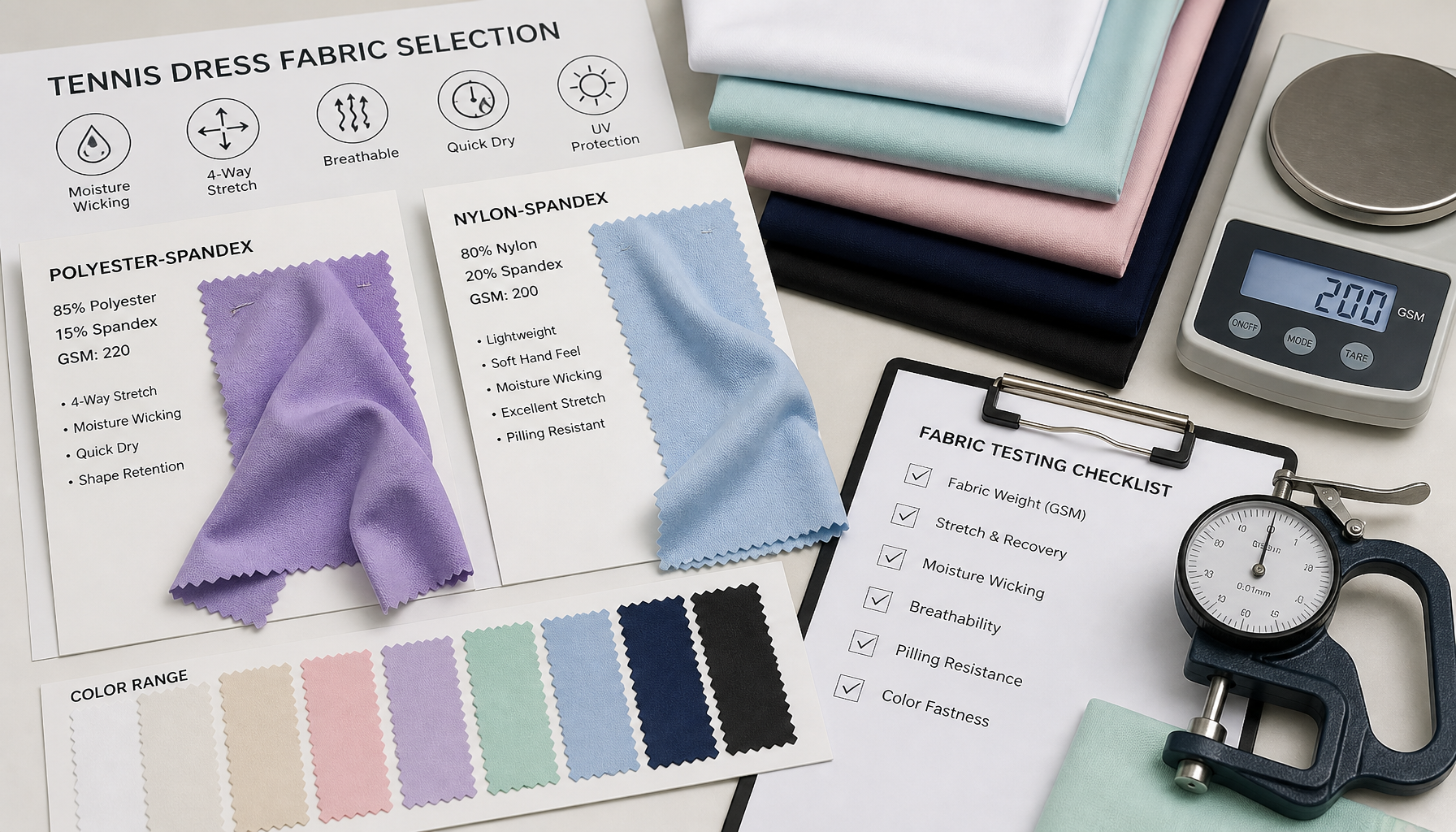
    Fabric for a tennis dress must balance movement, coverage, moisture handling, shape retention and skirt drape within one garment. Buyers should specify the bodice and skirt zones separately when their strain and coverage needs differ, then validate the selected fabric in a sewn prototype under the intended movement and care conditions.

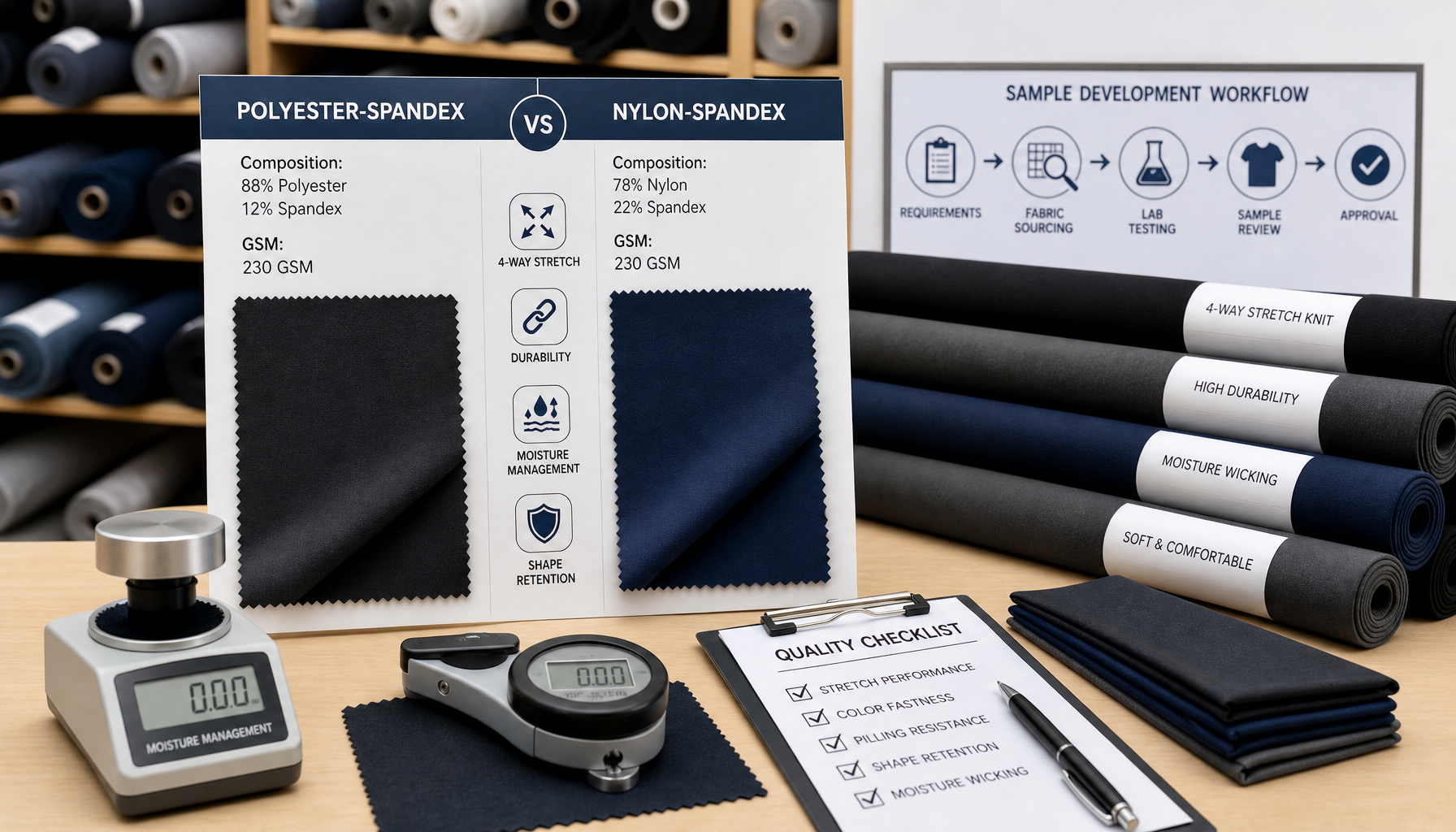
    Illustration: Tennis dress fabric evaluated for movement, drape and coverage
    Illustrative image; not a test record or production evidence.

    Map the Garment Zones

    The upper body may need secure recovery and low wet cling, while the skirt may need lighter drape and freedom from excessive static or curl. Integrated shorts introduce another requirement for opacity and recovery under higher extension. State whether one fabric must serve every zone or whether coordinated qualities are acceptable. This decision affects testing, color matching, sewing and material consumption before style details are added. Common development delays are summarized in which fabric problems most often delay tennis-dress development.

    Define Stretch and Recovery Conditions

    Specify required stretch direction based on pattern orientation and body movement, then agree on the method, extension level, holding time and recovery interval. A high stretch percentage is not enough if the material grows after repeated movement. Evaluate the prototype through lunges, lateral steps and seated positions, and check whether the waist, armhole and skirt return without rippling or permanent deformation.

    Balance GSM, Drape and Coverage

    GSM provides weight per area but does not independently define opacity or support. Construction, yarn, color and finishing also influence coverage. For an illustrative comparison, two fabrics at the same GSM can show different visibility when stretched because one opens more between stitches. Review light and dark colorways at garment-level strain and under realistic lighting before approving a range.

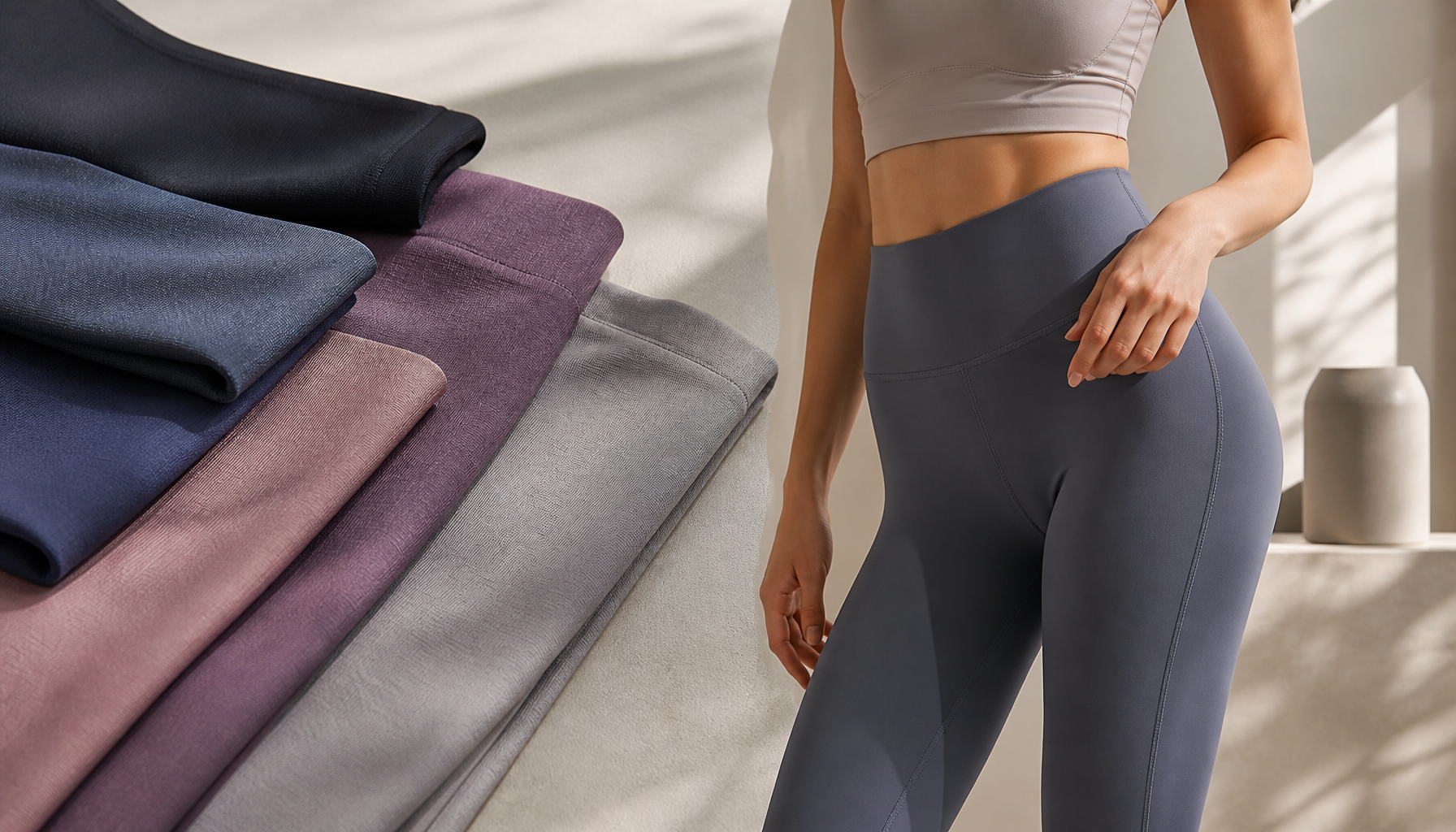
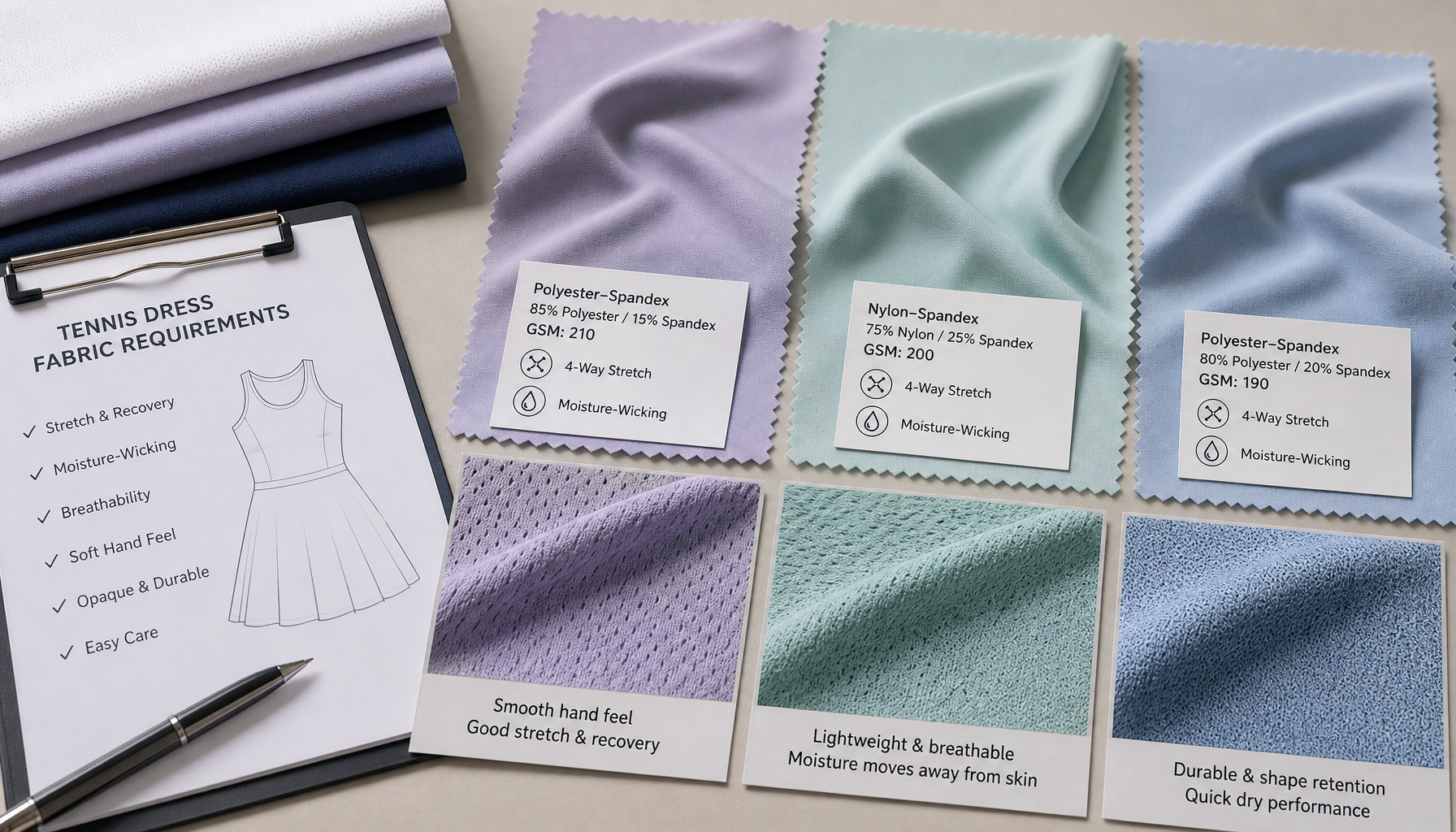
    Illustration: Stretch knit sample compared for a tennis dress bodice and skirt
    Illustrative image; not a test record or production evidence.

    Set Moisture and Care Requirements

    Decide whether the project needs liquid spreading, drying rate, air permeability or another specific measure; “breathable” cannot replace a test requirement. Define the washing and drying sequence used for dimensional stability, appearance and functional-finish durability. Outdoor use may also require a separately verified UV-protection target, but fiber composition or dark color alone should not be used as proof. Name the UV method, such as AS/NZS 4399 or AATCC 183, when a claim is required.

    Check Construction Compatibility

    Sew the fabric with the planned seams, elastic, zipper, binding and hem. Inspect needle damage, seam grin, puckering, skipped stitches and edge curl, then repeat the review after laundering. If the dress combines two fabrics, verify shade compatibility and differential shrinkage. A small difference in dimensional change can twist seams or create a wavy junction after care.

    Tennis-Dress Specification Brief

    • Garment zones and whether each uses the same quality
    • Composition, knit structure, target GSM and usable width
    • Stretch and recovery requirements by direction
    • Coverage condition and color range
    • Drape and hand-feel reference
    • Moisture, durability and colorfastness tests
    • Care method and dimensional-stability limits
    • Prototype movement and fit checks

    Sampling Decision

    Send ClothFactory the pattern concept, zone map, target measurements, color standard and required tests through the contact page. Compare candidates under the same conditions and record why one advances to garment sampling. Bulk approval should be based on a written specification plus a retained physical reference, not on the assumption that any nylon-spandex or polyester-spandex knit will perform the same way.

  • Fabric Problems That Delay Gym Shorts Development

    Fabric Problems That Delay Gym Shorts Development


    Gym-shorts development is most often delayed when the fabric brief leaves stretch, recovery, coverage, usable width, dimensional stability or finishing performance undefined. The fastest corrective action is not to request more random swatches, but to identify the failed decision, set one measurable acceptance condition and retest a controlled candidate in the intended garment construction.

    Illustration: Gym shorts fabric reviewed during an activewear development meeting
    Illustrative image; not a test record or production evidence.

    The Candidate Does Not Match the Garment Zone

    Loose training shorts, fitted cycling-style shorts and inner compression liners require different stretch, drape and coverage. Development stalls when one generic “gym shorts fabric” brief is used for all three. Map the shell, waistband, gusset and liner separately, then define whether each zone needs mobility, support, airflow, opacity or abrasion resistance. This narrows the sample set before color and styling work begins. A sample-review checklist is provided in what buyers should check when reviewing gym-shorts fabric samples.

    Stretch Is Reported Without Recovery Conditions

    A supplier may report a high extension value while the prototype grows at the seat or hem. The missing information is often load, holding time, direction and recovery interval. Use one agreed method and test both course and wale directions. Repeat movement on the sewn sample and measure whether critical dimensions return after rest; otherwise, the team may keep changing patterns to compensate for a material problem.

    GSM Is Used as a Proxy for Coverage

    Low GSM does not automatically mean transparent, and higher GSM does not guarantee opacity. Yarn, stitch density, color, finishing and strain all affect coverage. Evaluate the actual color while stretched to the garment’s measured extension over the intended liner or reference background. This prevents late rejection after a fashion color is approved on a relaxed swatch but fails during movement.

    Illustration: Stretch fabric assessed for gym shorts coverage and recovery
    Illustrative image; not a test record or production evidence.

    Finish and Care Conditions Arrive Too Late

    Brushing, wicking, cooling or antibacterial treatments can change hand feel, dimensions and sewing behavior. Delays occur when a base fabric is approved first and the finish is introduced after garment sampling. List optional finishes in the first brief, request the intended finishing route on sample yardage, and assess performance and appearance after the agreed wash sequence before bulk release.

    The Fabric and Sewing Process Conflict

    Needle damage, seam grin, puckering and edge curl can appear only after cutting. Use production-intended needles, thread, elastic and seam types during prototyping. If the fabric is changed, repeat the sewing trial instead of assuming similar composition means identical machinability. Record acceptable seam appearance and stretch so the factory has a practical setup reference.

    Delay-Prevention Gate

    Development gate Required decision
    Brief Garment zones and measurable priorities
    Fabric shortlist Comparable composition, GSM, width and stretch data
    Sample yardage Color, finish and production-relevant construction
    Prototype Fit, movement, coverage and seam compatibility
    Wash trial Dimensions, appearance and finish durability
    Bulk release Signed specification and retained reference

    Procurement Action

    Send ClothFactory the style drawing, zone map, target measurements, color, care method and failure priorities before requesting samples. When a candidate fails, record the condition and required correction rather than restarting with a vague request for something “better.” A controlled decision log reduces repeated sampling and prevents the same unresolved issue from moving into bulk production. Send the brief to ClothFactory through the contact page before requesting samples.

  • How to Compare Fabric Suppliers for Running Tights

    How to Compare Fabric Suppliers for Running Tights


    Compare running-tights fabric suppliers through the same specification, sample quantity, test methods and garment trial—not through swatch feel or price per kilogram alone. The preferred supplier is the one that can reproduce coverage, stretch recovery, dimensional stability, shade, usable width and surface durability while documenting the actual cost and risk of bulk production.

    Illustration: Running tights fabric candidates compared under the same sourcing brief
    Illustrative image; not a test record or production evidence.

    Use One Technical Brief

    Send every supplier the garment application, target composition and construction, GSM and usable width, stretch and recovery conditions, color, finish, care method and required tests. State the extension at which opacity will be reviewed and whether the tights include brushed surfaces, prints or bonded details. Suppliers cannot be compared fairly when each is allowed to interpret “supportive” or “squat-proof” differently. A comparable brief for yoga leggings is set out in comparing yoga-legging fabric suppliers.

    Compare Measured Performance

    Request results for dimensional stability, stretch and recovery by direction, colorfastness and application-specific surface durability. Check method, conditioning, units and specimen state before placing values in one table. A higher number is not automatically better: excessive stretch with weak recovery can create knee or seat growth, while a firm fabric can restrict movement even if its relaxed hand feels substantial.

    Test Coverage on the Intended Color

    Opacity depends on construction, yarn, color and strain. Use the same background, lighting and extension condition for every candidate, then confirm the result in a sewn garment. A dark development sample should not approve a pale production color. For result interpretation, see how to interpret fabric opacity test results. Ask whether different colors require construction or dye adjustments and whether those changes affect GSM, hand feel or delivery.

    Illustration: Stretch and opacity comparison of fabric for running tights
    Illustrative image; not a test record or production evidence.

    Calculate Usable-Garment Cost

    Normalize price to the same unit and include usable width, measured GSM, shrinkage allowance, defect loss, short-roll handling and marker yield. An illustrative comparison: a cheaper fabric that forces a less efficient marker or higher panel rejection may cost more per acceptable garment. Run the same pattern and size ratio on each candidate rather than converting kilograms to meters with unverified nominal data.

    Assess Reproduction and Service

    Review how the supplier controls yarn, knitting, dye lot, finishing, shade grouping and roll inspection. Ask for a dated sample-to-bulk workflow and the process for nonconforming material. Communication speed matters only when answers are technically complete and recorded. A supplier that confirms limitations early is less risky than one that promises every function without test conditions.

    Supplier Scorecard

    Area Comparison evidence
    Application fit Sewn prototype and movement review
    Performance Comparable raw test reports
    Coverage Same color, strain and lighting condition
    Yield Marker using verified usable width
    Consistency Bulk-control and inspection records
    Commercial fit MOQ, lead time, price basis and claims terms

    Final Qualification

    Advance no more candidates than the team can test under controlled conditions. ClothFactory should receive the same brief through the contact page and be scored against the same evidence as other suppliers. Approve the selected fabric, color and finishing route rather than issuing blanket supplier approval, then retain the specification, sample and reports for repeat-order comparison.

  • How to Choose Fabric for Yoga Leggings

    How to Choose Fabric for Yoga Leggings


    Choose yoga-legging fabric by matching its force, stretch recovery, coverage, moisture behavior, and wash stability to the intended fit and body zones. Composition and GSM help define candidates, but neither can confirm squat coverage, support, or long-term shape retention without controlled fabric and garment testing.

    Yoga-legging fabric reference for buyer evaluation

    Define the legging before selecting the fabric

    Start with the use case: low-impact yoga, studio-to-street wear, hot-weather training, or a higher-support legging. Record the rise, waistband construction, target compression, color range, size range, care label, and expected extension at the seat, thigh, knee, and waistband.

    A soft fabric may suit a comfort-led collection but provide insufficient force for a sculpting fit. A firmer fabric can improve support while increasing dressing effort and seam stress. The buyer must choose the tradeoff deliberately rather than ask for the “best” legging fabric.

    Compare nylon-spandex and polyester-spandex as starting points

    Nylon-spandex is often considered when a smooth, soft hand is important. Polyester-spandex can be considered for constructions targeting repeated training use or specific moisture behavior. These are screening tendencies, not guarantees.

    Yarn type, knit construction, spandex placement, dyeing, and finishing can make two fabrics with the same blend behave differently. Compare finished samples under the same conditions and specify any required moisture, abrasion, or colorfastness result separately.

    Evaluate coverage at garment-relevant extension

    Opacity should be assessed in the selected color and at the extension expected during a squat. Inspect the fabric over a controlled contrasting background and confirm the result in a fitted garment under consistent lighting. A relaxed swatch or one dark color cannot represent the whole color range.

    GSM influences mass and often coverage, but a heavier fabric is not automatically squat-proof. Yarn size, loop density, thickness, color, and extension determine how much the structure opens.

    Yoga leggings under movement for fabric coverage assessment

    Measure stretch, force, recovery, and growth

    Maximum stretch shows how far the fabric can extend, not how it feels at normal wear extension or how well it returns. Record test direction, load or extension, cycles, hold time, recovery time, and conditioning. Measure residual growth separately and repeat the relevant checks after the intended wash cycle.

    The garment sample must validate waistband hold, knee recovery, seam appearance, and comfort. Pattern reduction and seam construction can change fit even when fabric results remain within tolerance.

    Approve surface and care performance

    For yoga leggings, review pilling, abrasion, snagging, crocking, perspiration colorfastness, dimensional stability, and spirality as relevant to the product brief. If brushed, cooling, wicking, or anti-odor finishes are requested, confirm whether they are standard or optional and define how performance will be evaluated after laundering.

    Send a comparable sourcing brief

    Include:

    • garment use, fit, size range, and critical body-zone extension;
    • target composition, construction, finished GSM, width, hand, and color;
    • stretch, force, recovery, and residual-growth conditions;
    • coverage requirement and assessment setup;
    • wash route and dimensional tolerances;
    • relevant durability and colorfastness tests;
    • sample identification and bulk-lot traceability.

    Procurement next step

    Request two or more identified candidates against the same brief, then compare fabric data, sewn panels, and washed garment samples. ClothFactory can match an existing nylon-spandex or polyester-spandex base fabric or discuss development changes, but bulk approval should follow a written specification and sealed sample rather than a composition name or hand-feel preference alone.

  • Brushed Nylon Spandex for Winter Leggings

    Brushed Nylon Spandex for Winter Leggings


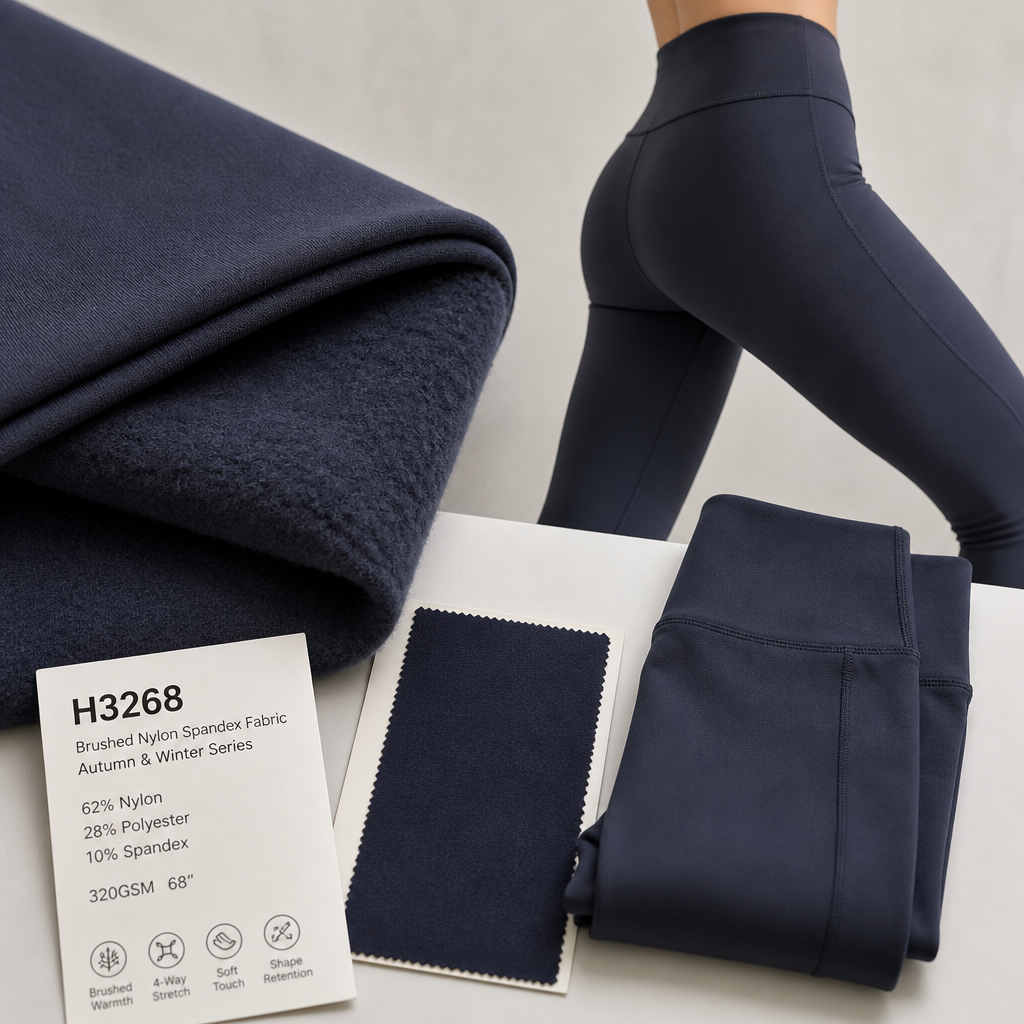
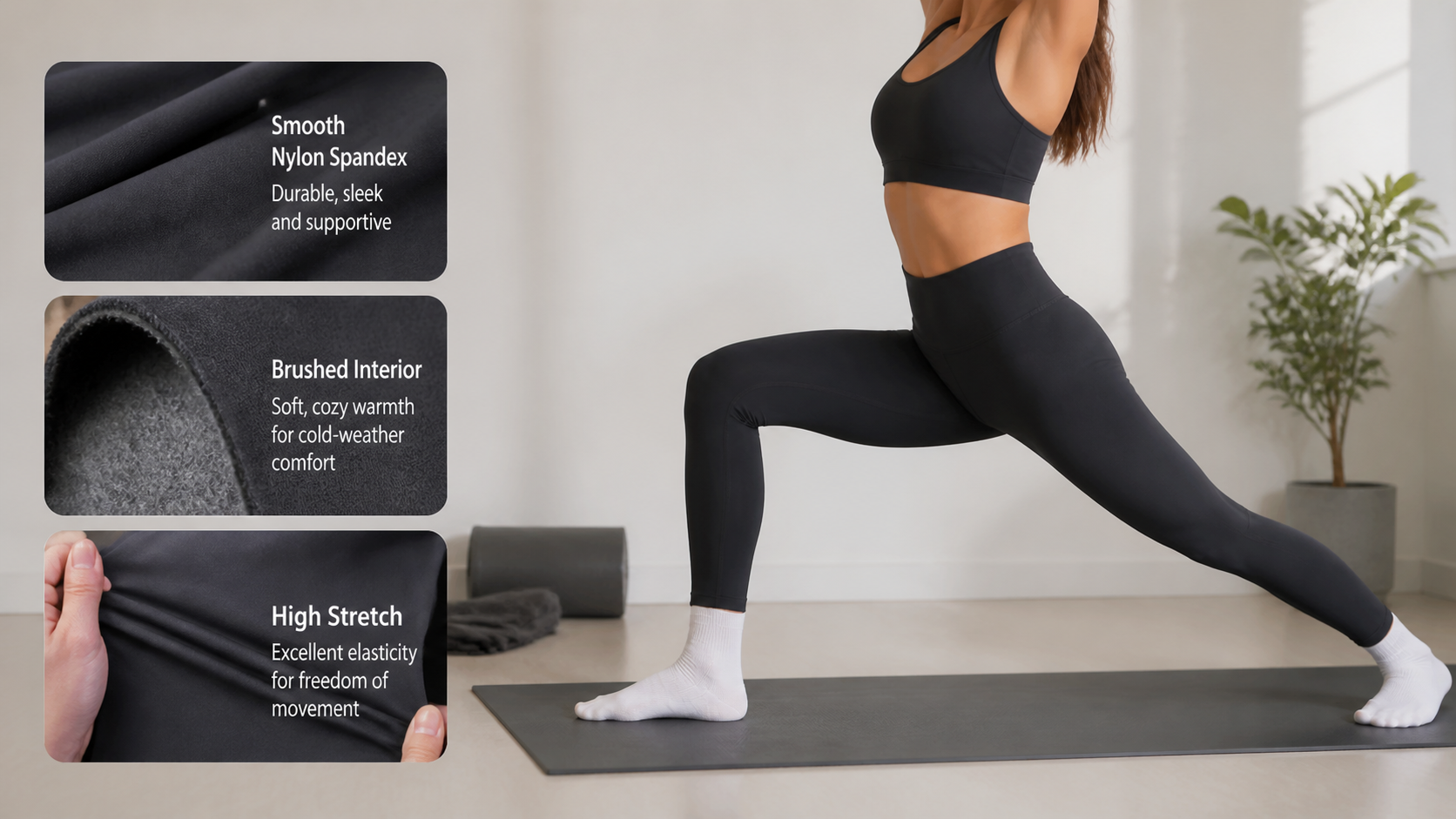
    H3268 is a 78% nylon, 22% spandex fabric specified at 240 GSM with a one-side brushed surface, making it a candidate for winter yoga leggings and close-fitting cold-weather activewear. Buyers should approve warmth, recovery, opacity, surface durability, and wash stability on the finished color; composition, GSM, and brushing alone do not prove thermal performance or garment coverage.

    What the brushed construction can change

    Brushing raises fibers on one face of the fabric and can create a softer contact surface with more entrapped air than the same construction before brushing. That may improve perceived warmth, but the result depends on pile height, knit density, wind exposure, moisture, garment fit, and the surrounding clothing system.

    The supplied description identifies a one-side fine brushed surface. It does not provide thermal-resistance test data, so terms such as “constant temperature” or a guaranteed temperature range should not be used without a defined method and report.

    Reference image supplied for H3268 brushed fabric

    Evaluate the 78/22 composition and 240 GSM together

    The 22% spandex content indicates a high-elastane blend, but it does not by itself define stretch percentage, recovery, compression, or low-temperature behavior. Request results in both fabric directions under one agreed method, and test the intended garment at its actual pattern reduction.

    At 240 GSM, H3268 carries more fabric mass than a lightweight activewear knit. More mass may support coverage and a warmer hand, but warmth cannot be ranked by GSM alone. Knit construction, thickness, brushing, air permeability, moisture condition, and garment layering all affect the wear result.

    Garment-level checks for winter leggings

    Approve the fabric in the selected color and in a representative prototype. The evaluation should include:

    • coverage at the hip, seat, knee, and other high-extension zones;
    • stretch recovery after movement and after the agreed wash cycle;
    • surface pilling and abrasion on both the smooth and brushed faces;
    • dimensional change in length and width;
    • colorfastness under the relevant wash, perspiration, and rubbing conditions;
    • comfort of the brushed face during extended skin contact;
    • drying behavior after exercise or washing if moisture management is part of the brief.

    The original material description refers to a colorfastness grade of 4–5, but a grade is not a complete acceptance record without the test method, tested color, exposure condition, staining scale, color-change scale, and report. Buyers should request that evidence before repeating the claim in a product specification.

    Control nap direction during production

    A one-side brushed fabric has a directional surface. Pattern markers should keep the nap orientation consistent across garment panels unless the design intentionally calls for contrast. Mixed direction can produce visible shade or texture differences even when panels are cut from the same roll.

    Allow the fabric to relax before measuring and cutting, and record the spreading tension. Cutting quality should be assessed on the actual bulk finish; laser cutting is not automatically preferable, and its suitability depends on edge response, discoloration risk, equipment settings, and garment design.

    Second reference image supplied for H3268 brushed fabric

    Sewing and bulk-approval requirements

    Use a production sewing trial to select the needle, thread, stitch type, stitch density, seam allowance, and differential-feed settings. Inspect seams under representative extension for skipped stitches, thread breakage, seam grin, tunneling, and permanent deformation. Repeat the assessment after the specified wash and drying cycle.

    For bulk approval, define roll-to-roll limits for GSM, usable width, shade, surface appearance, and brushing consistency. A single approved swatch cannot represent every roll unless the lot is checked against the same standards.

    Buyer request checklist

    When requesting H3268 samples, provide:

    1. Garment type and intended cold-weather use.
    2. Target fit and pattern reduction, if established.
    3. Required finished width and GSM tolerance.
    4. Color and opacity requirement at garment extension.
    5. Stretch, recovery, dimensional-stability, pilling, abrasion, and colorfastness criteria.
    6. Intended care cycle and required number of validation washes.
    7. Any warmth or moisture-management requirement expressed as a defined test, not a marketing term.

    ClothFactory can then compare the submitted requirement with the available H3268 specification and prepare a sample for garment-level validation. Bulk approval should follow only after the fabric, color, construction, and test conditions match the buyer's written specification.

  • Fine-Rib Nylon Spandex for Performance Polo Shirts

    Fine-Rib Nylon Spandex for Performance Polo Shirts


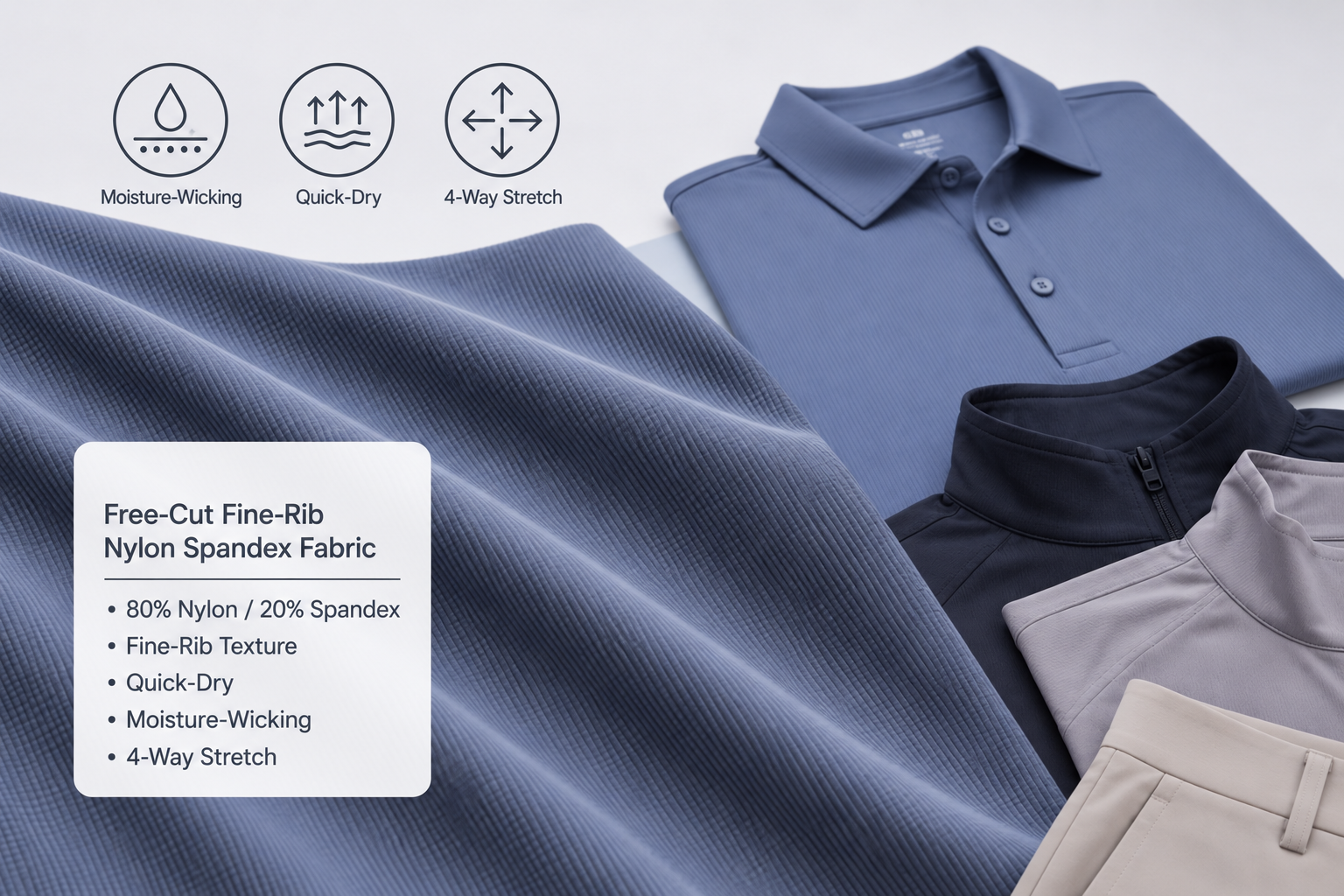
    H131 is a fine-rib nylon-spandex candidate for performance polos and lightweight athleisure when the product brief requires a refined surface, stretch, and low garment bulk. The available product description identifies an 80% nylon/20% spandex composition and 160 gsm finished weight; buyers should confirm the current specification, usable width, stretch response, finish, and edge stability on the actual sample before approval.

    Match H131 to the garment architecture

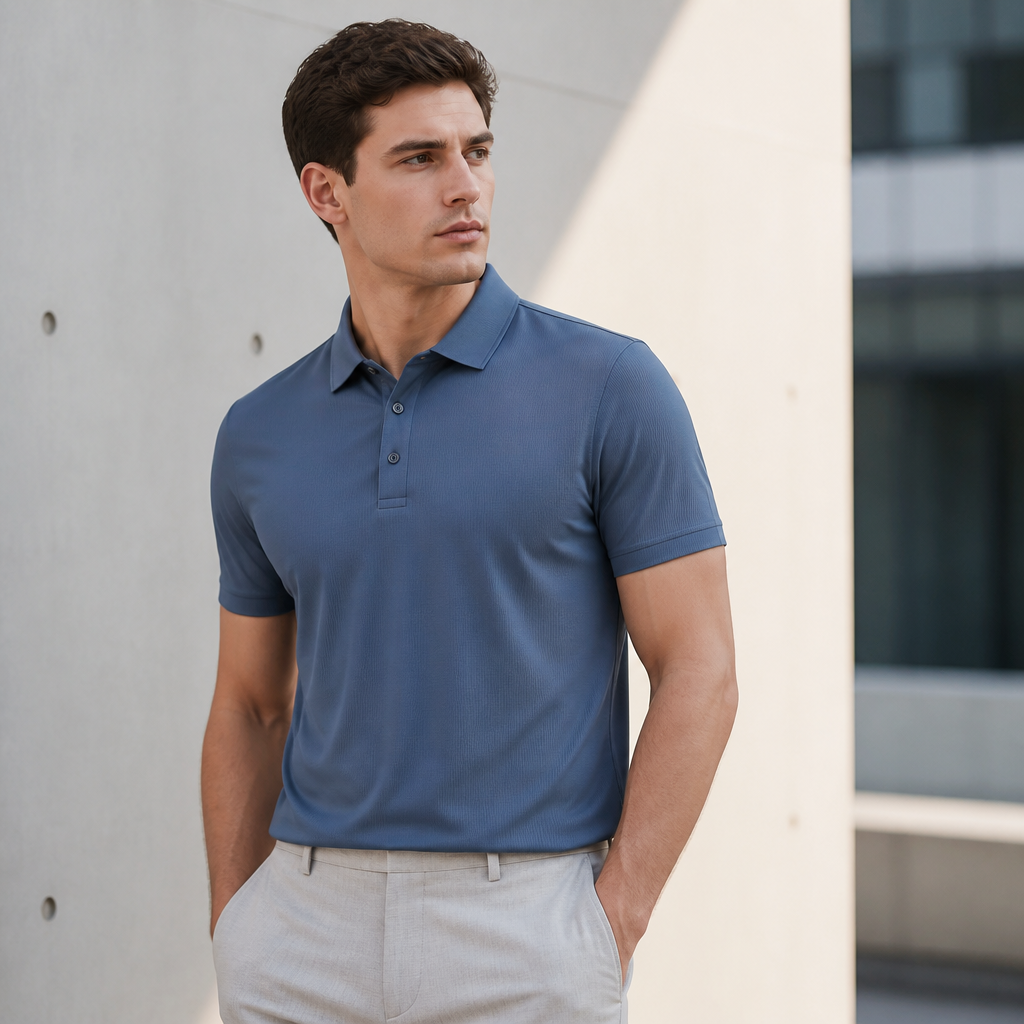
    The fine vertical rib can give a knitted fabric a cleaner, more structured appearance than a plain smooth surface. That makes H131 relevant to polo bodies, fitted training tops, technical undershirts, and business-athleisure layers where the garment must look polished while allowing movement.

    The application still controls the decision. A polo body requires drape and recovery, while collars and cuffs may need separate materials or reinforcement to maintain shape. A close-fitting base layer places more emphasis on next-to-skin hand, seam comfort, moisture behavior, and recovery after repeated extension. Buyers should not assume one fabric will satisfy every panel in the garment.

    Confirm composition, weight, and usable width together

    Composition and GSM do not define fabric yield on their own. Costing also depends on finished usable width, edge loss, shrinkage, shade continuity, and marker efficiency. Record all of these values on the approved specification rather than relying on a sales sample label.

    Illustrative calculation — not H131 production data: if a 160 gsm fabric has an assumed usable width of 1.50 m, 100 linear metres contain approximately:

    160 g/m² × 1.50 m × 100 m ÷ 1,000 = 24 kg

    Changing the usable width changes the linear yield even when GSM stays at 160. This is why a metres-per-kilogram figure cannot be evaluated without the finished width and agreed conditioning state.

    Treat cooling and quick-dry language as test requirements

    Fiber composition alone does not prove cooling, wicking, or quick drying. Yarn cross-section, knit geometry, capillary pathways, finishes, fabric thickness, air movement, and garment fit all affect moisture and thermal behavior.

    If a performance polo or training top will carry a cooling or quick-dry claim, ask for the test method, conditioning, specimen orientation, result, and acceptance criterion for the finished fabric. Confirm whether the effect comes from the yarn or an applied finish, and repeat the relevant check after the intended care cycle. A water-drop demonstration or a general statement about nylon is not sufficient evidence for a product claim.

    Verify free-cut performance on the intended process

    “Free-cut” should be treated as a manufacturing condition, not an unconditional fabric property. Edge curling, fraying, laddering, distortion, and delamination risk can change with cut direction, rib alignment, cutting method, wash treatment, seam design, and the distance between the cut edge and bonded or stitched area.

    Before approving a raw-edge, laser-cut, ultrasonic-cut, or bonded construction:

    • cut specimens in both fabric directions and across the intended panel geometry;
    • inspect the edge relaxed and under the garment's expected extension;
    • complete the planned bonding or sewing operation using production equipment;
    • wash the sample according to the intended care label;
    • check edge stability, seam slippage, curl, appearance, and recovery after laundering.

    Passing one straight-edge trial does not establish that every curved opening or cut direction will remain stable.

    Control rib direction and sewing trials

    Fine ribs make panel rotation and grain misalignment easier to see. The marker plan should preserve the approved rib direction unless a deliberate contrast is part of the design. Check shade and surface reflection from the same viewing direction before cutting bulk fabric.

    Needle point, needle size, thread, stitch type, presser-foot pressure, and feed settings should be selected through a sewing trial on conditioned production fabric. The correct settings depend on the machine, seam construction, fabric lot, and elastic demand; a fixed needle recommendation without that context is not a reliable production standard. Inspect for skipped stitches, needle cutting, seam grin, puckering, and recovery after extension.

    Compare the sample against measurable acceptance points

    Decision area What to record Why it matters
    Identity Composition, knit construction, product reference, dye lot Links the sample to the bulk specification.
    Weight and yield Finished GSM, usable width, shrinkage, edge loss Supports comparable costing and marker planning.
    Fit response Stretch and recovery by direction, extension, hold time, recovery time Shows whether the fabric can support the intended silhouette.
    Surface Rib alignment, hand, pilling, snagging, abrasion Protects appearance in polos and fitted layers.
    Moisture claim Defined test method and post-wash result Separates verified performance from marketing language.
    Edge process Cutting method, panel direction, bonding or sewing condition, wash result Confirms whether the intended free-cut construction is production-ready.

    H131 fine-rib fabric application reference for performance tops

    Avoid common sourcing errors

    • Using 160 gsm as proof of structure. Weight does not establish collar support, opacity, drape, or recovery.
    • Assuming spandex percentage defines stretch. Yarn placement and knit construction affect extension and growth.
    • Approving “quick dry” without a method. Test conditions and post-wash retention must be stated.
    • Applying “free cut” to every panel. Curves, cut direction, bonding, and laundering can change edge behavior.
    • Rotating panels without checking rib direction. The finished garment may show visible texture or shade mismatch.

    Procurement next step

    Send the supplier the garment type, panel use, target fit, finished GSM and width, stretch and recovery conditions, color, care cycle, moisture claim, and intended edge process. Request an identified H131 swatch, current specification sheet, test evidence for any performance claim, and enough material for cutting, sewing, bonding, washing, and garment-fit trials. Approve bulk fabric only after those conditions are recorded against a sealed reference sample.

  • Free-Cut Wide-Rib Fabric for Summer Activewear

    Free-Cut Wide-Rib Fabric for Summer Activewear


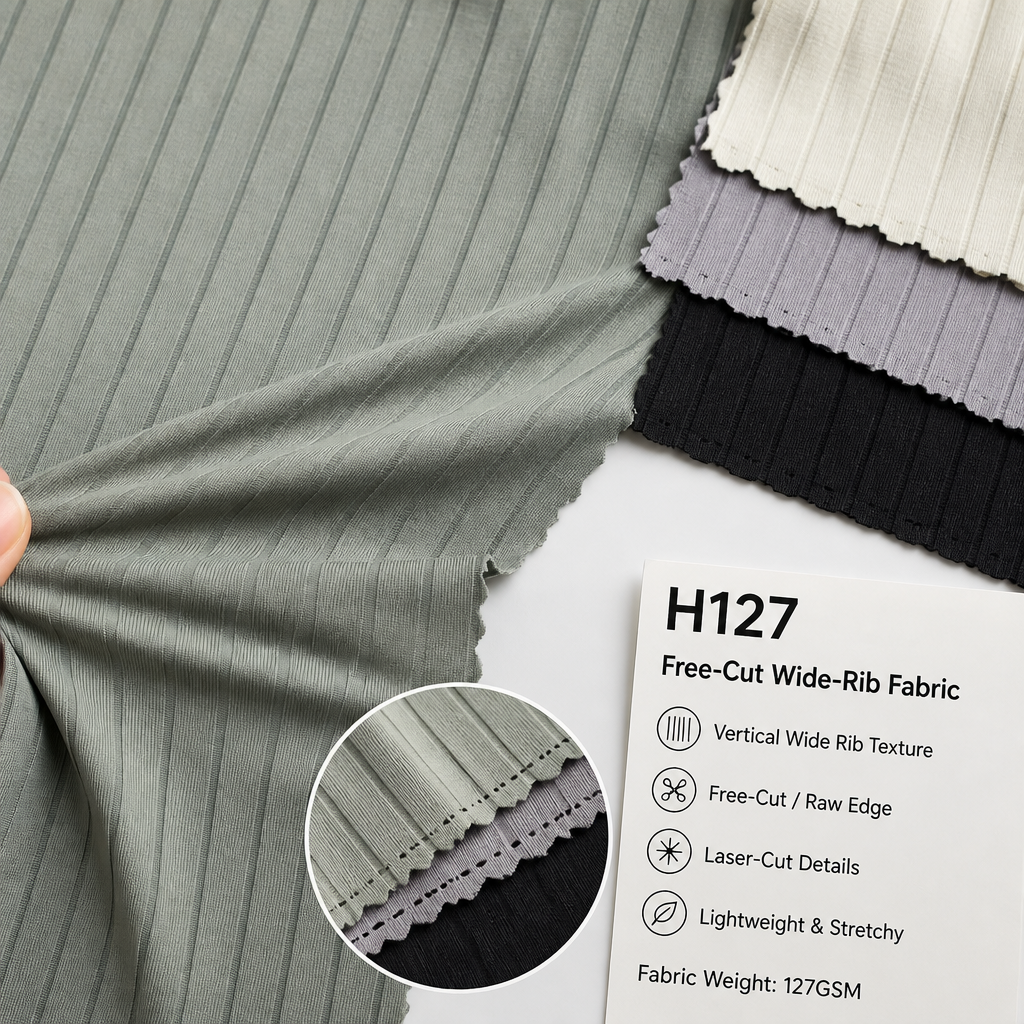
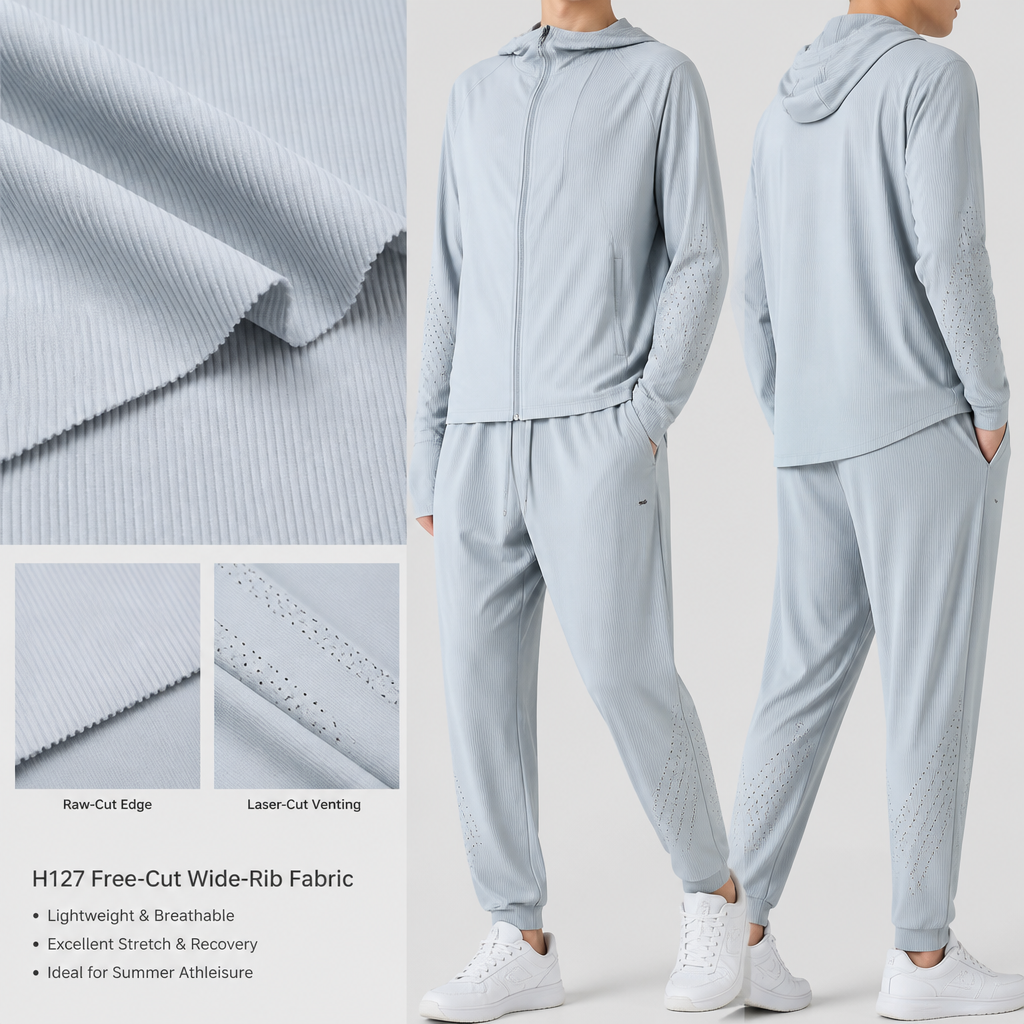
    H127 is a candidate for lightweight joggers, summer jackets and textured athleisure when the design requires a 160 GSM wide-rib fabric with a stated 20% spandex content. Its free-cut suitability, edge stability, moisture performance and sun-protection level must still be validated on the selected color, cutting method and finished garment; none of these results can be confirmed from GSM, rib texture or composition alone.

    Define the application before approving the fabric

    The three proposed applications place different demands on the material. Joggers require recovery at the knee and seat, waist-seam stability and acceptable coverage. A lightweight jacket requires controlled drape, seam stability and comfort during arm movement. A sun jacket also needs a defined ultraviolet-protection requirement, supported by testing on the finished fabric rather than by fabric weight or coverage claims alone.

    The sourcing brief should identify the garment, fit, intended climate, lining arrangement, edge construction and care cycle. Without these conditions, a sample can look suitable on the table but fail after cutting, stretching or laundering.

    H127 wide-rib fabric reference image

    Treat the supplied specification as the starting point

    Supplied detail Procurement relevance What still requires approval
    160 GSM finished weight Supports comparison with the target garment-weight range Thickness, coverage, drape and finished-weight tolerance
    20% spandex Indicates the stated elastane share Stretch, recovery, residual growth and seam behaviour
    Wide vertical rib surface Provides a visible and tactile design feature Rib scale, straightness, distortion and alignment across panels
    Free-cut positioning May support selected raw-edge details Fraying, curling and edge stability after wear and washing

    Do not use the original statement about moisture management as an acceptance result. Wicking and drying depend on yarn, knit construction, dyeing, finishing and test conditions, so they require separate evaluation if they are part of the product claim.

    Validate free-cut performance on the actual design

    “Free-cut” should be written as a measurable sample requirement, not treated as permission to remove every hem or binding. Test the exact cutting process intended for production—such as blade, die or laser cutting—because heat, pressure and cut direction can change the edge.

    Prepare sample pieces in the course, wale and bias directions, then assess them after handling and the agreed wash cycles. Record edge fraying, curling, splitting, rib distortion and surface discoloration. Raw edges at a pocket opening, cuff or ventilation detail may experience different stress, so each critical placement should be included in the garment trial.

    Laser-cutting suitability also cannot be assumed. A trial is required to check whether the edge hardens, discolors or leaves residue, and whether the result remains acceptable against the skin.

    Account for weight, usable width and rib alignment

    GSM determines fabric mass per unit area, not the finished garment weight by itself. An illustrative calculation, not ClothFactory production data, can be used during early costing. If a style consumes 1.40 m² before cutting loss, its estimated fabric mass is:

    1.40 m² × 160 g/m² = 224 g

    The final value will change with actual marker consumption, usable width, relaxation, matching loss, trims and construction. Wide ribs can increase cutting loss when panels must follow the same vertical direction or when visible seams require rib alignment. Buyers should therefore cost from the production marker rather than from nominal width alone.

    Separate sun coverage from verified UV protection

    A lightweight fabric may be suitable for the silhouette of a sun jacket, but the term “sun protective” requires a defined test and acceptance level. Results can vary with color, stretch, moisture and finishing. If ultraviolet protection is a sales claim, specify the relevant test method, the condition of the specimen and whether performance must be confirmed after laundering. Approval of one dark color should not be extended automatically to pale colors.

    The same discipline applies to cooling, breathability and moisture-wicking claims. Evaluate only the properties required by the product brief and record the test conditions so candidates can be compared on the same basis.

    Check stretch, recovery and garment construction

    For joggers, compare dimensional change and residual growth at the knee and seat after wear simulation and laundering. For jackets, check arm mobility, seam extension and whether the ribs distort around curved panels. The stated 20% spandex content does not establish the extension or recovery of the finished knit.

    The sewing trial should determine needle, thread, stitch type, differential feed and presser-foot pressure. Inspect for skipped stitches, seam puckering, needle cutting, visible pressure marks and seam grin. Pattern pieces should use a controlled rib direction unless the design intentionally varies it.

    H127 fabric reference for raw-edge and garment sampling

    Build a comparable H127 sample request

    Provide the supplier with:

    • garment type, intended climate, target fit and use conditions;
    • stated composition, 160 GSM target and agreed tolerance;
    • required finished usable width and rib orientation;
    • exact raw-edge locations and the planned cutting process;
    • stretch, recovery and dimensional-stability methods;
    • color standard and shade evaluation conditions;
    • any required moisture-management or UV-protection tests;
    • wash cycles and acceptance criteria for edge stability;
    • enough sample yardage for a full cutting and sewing trial.

    Approve the fabric only after the material test, raw-edge trial and fitted prototype meet the same written brief. ClothFactory can then compare the approved sample with bulk rolls for weight, width, shade, rib consistency and the specific performance conditions agreed for the garment.

  • Matte Brushed Nylon Spandex for Yoga Leggings

    Matte Brushed Nylon Spandex for Yoga Leggings


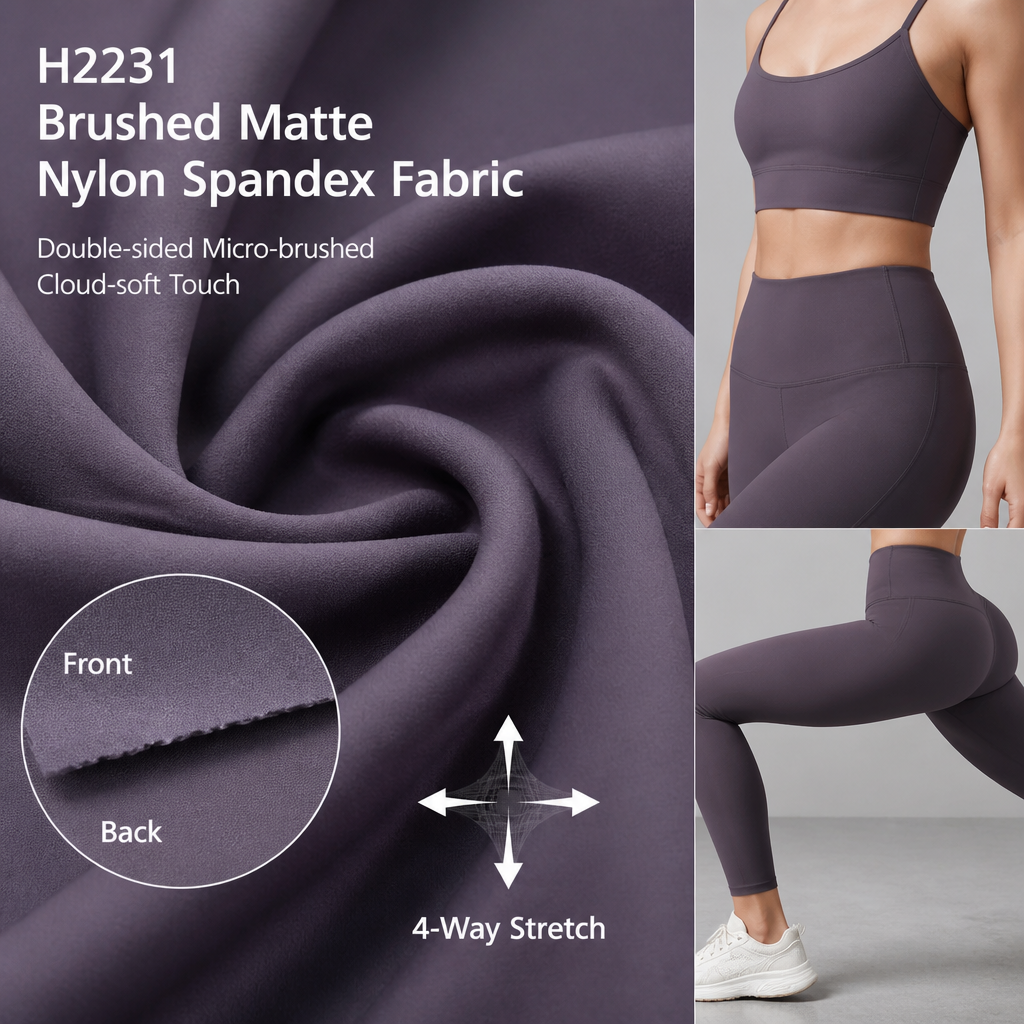
    H2231 is worth sampling for close-fitting yoga leggings and athleisure styles when a soft, matte surface is part of the design brief. The supplied specification identifies a 230 GSM nylon-spandex fabric with 25% spandex and a double-sided micro-brushed finish, but buyers should approve coverage, stretch recovery, surface durability and shade consistency on the finished garment rather than infer them from composition or weight alone.

    Start with the intended garment and fit

    A fabric for soft-touch leggings must satisfy more than a hand-feel target. The sourcing brief should state whether the garment is intended for yoga, low-impact studio wear, travel or everyday athleisure; whether the fit is compressive or relaxed; and whether the design includes high-stress zones such as a deep squat position or a tightly stretched seat panel.

    The same fabric can behave differently in leggings and tops because the extension applied in wear is different. A swatch that appears opaque while relaxed may lose coverage when stretched, while a finish that feels smooth on a flat sample may show direction-dependent shading after panels are cut and sewn.

    Interpret the H2231 specification as a sampling target

    Supplied detail Procurement relevance What still requires approval
    230 GSM finished weight Establishes the target fabric mass for lot comparison Finished thickness, drape, garment weight and tolerance by lot
    25% spandex Indicates a high elastane share in the stated composition Stretch percentage, recovery, residual growth and performance after laundering
    Double-sided micro-brushed finish Targets a soft surface on both sides Pilling, abrasion, shedding, snagging and finish consistency
    Matte appearance Supports a low-sheen visual direction Reflectivity and shade appearance under agreed lighting and at garment extension

    These items should appear on the sample request and bulk approval sheet. They should not be treated as proof of comfort, breathability, opacity or long-term shape retention.

    Approve the brushed surface before approving color

    Micro-brushing changes both touch and the way light reflects from the fabric surface. Directional fibers can make adjacent panels appear lighter or darker even when they come from the same dye lot. The cutting marker should therefore keep the surface direction consistent across visible garment panels, and the approval sample should be examined under the lighting conditions used by the brand for color evaluation.

    H2231 brushed matte fabric reference image

    The finish also needs a durability check. Compare the unwashed sample with the garment after the agreed care cycles for changes in hand feel, surface fuzz, pilling and visible pressure marks. If the collection includes dark and light shades, assess both: surface contrast and visible fiber disturbance can differ by color.

    Separate fabric mass from thermal comfort and garment weight

    At 230 GSM, H2231 has a defined mass per square metre, but GSM alone does not establish warmth. Knit construction, thickness, trapped air, brushing, garment fit and layering conditions all influence the wearer’s thermal experience.

    An illustrative calculation, not ClothFactory test data, shows how GSM affects material mass. If a finished garment uses 1.10 m² of fabric before production waste, the estimated fabric mass is:

    1.10 m² × 230 g/m² = 253 g

    This estimate can help compare garment weight targets, but it does not include thread, elastic, trims, cutting loss or the effect of fabric relaxation. Buyers should calculate consumption from the actual marker and confirmed usable width.

    Validate coverage, stretch and recovery on the garment

    For leggings, request stretch and recovery results in both fabric directions using the same method, extension level, conditioning and recovery time for every candidate. A high spandex percentage does not by itself establish four-way stretch, compression level or recovery after repeated wear.

    Coverage should also be checked at the intended garment extension, especially for pale colors and printed or heathered variants. Approve a fitted prototype on the target size range and inspect high-extension areas under consistent lighting. A passing result for one color cannot be applied automatically to every shade because dyeing and visual contrast can change perceived opacity.

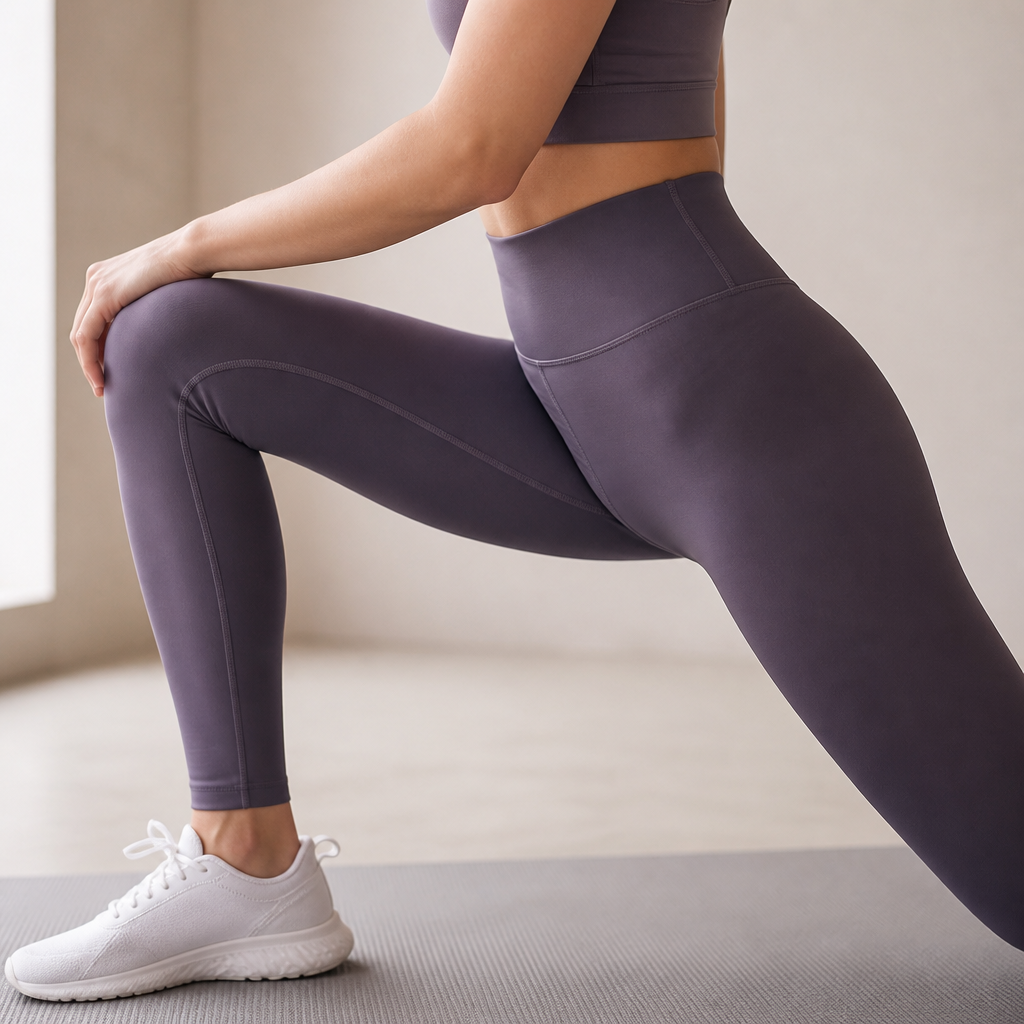
    H2231 fabric shown for athleisure application review

    Run production trials around the surface finish

    Before bulk cutting, the garment factory should confirm nap direction, spreading tension and panel orientation. A short cutting and sewing trial can reveal edge curling, needle marks, seam grin, skipped stitches or visible compression of the brushed surface. Needle, thread, stitch type and machine pressure should be selected from trial results rather than prescribed from fabric composition alone.

    Bulk inspection should compare approved and production rolls for finished weight, usable width, shade, surface direction, brushing uniformity and visible defects. Rolls with noticeable shade or surface variation should be segregated before marker planning.

    What to include in an H2231 sample request

    Send the supplier a brief that records:

    • garment type, intended activity and target fit;
    • stated composition, 230 GSM target and required tolerance;
    • finished usable width and the method used to measure it;
    • color standard and evaluation lighting;
    • required stretch, recovery and dimensional-stability methods;
    • coverage approval conditions at garment extension;
    • care cycle used for hand-feel, pilling and surface-retention review;
    • cutting and sewing observations from the first prototype.

    Ask for enough fabric to make a complete fit sample in the intended color, then compare the tested prototype with the retained approval swatch. ClothFactory can use that documented brief to determine whether H2231 should proceed to color approval and bulk review or whether a different construction is needed.

  • Bonded Fleece Fabric for Cold-Weather Activewear

    Bonded Fleece Fabric for Cold-Weather Activewear


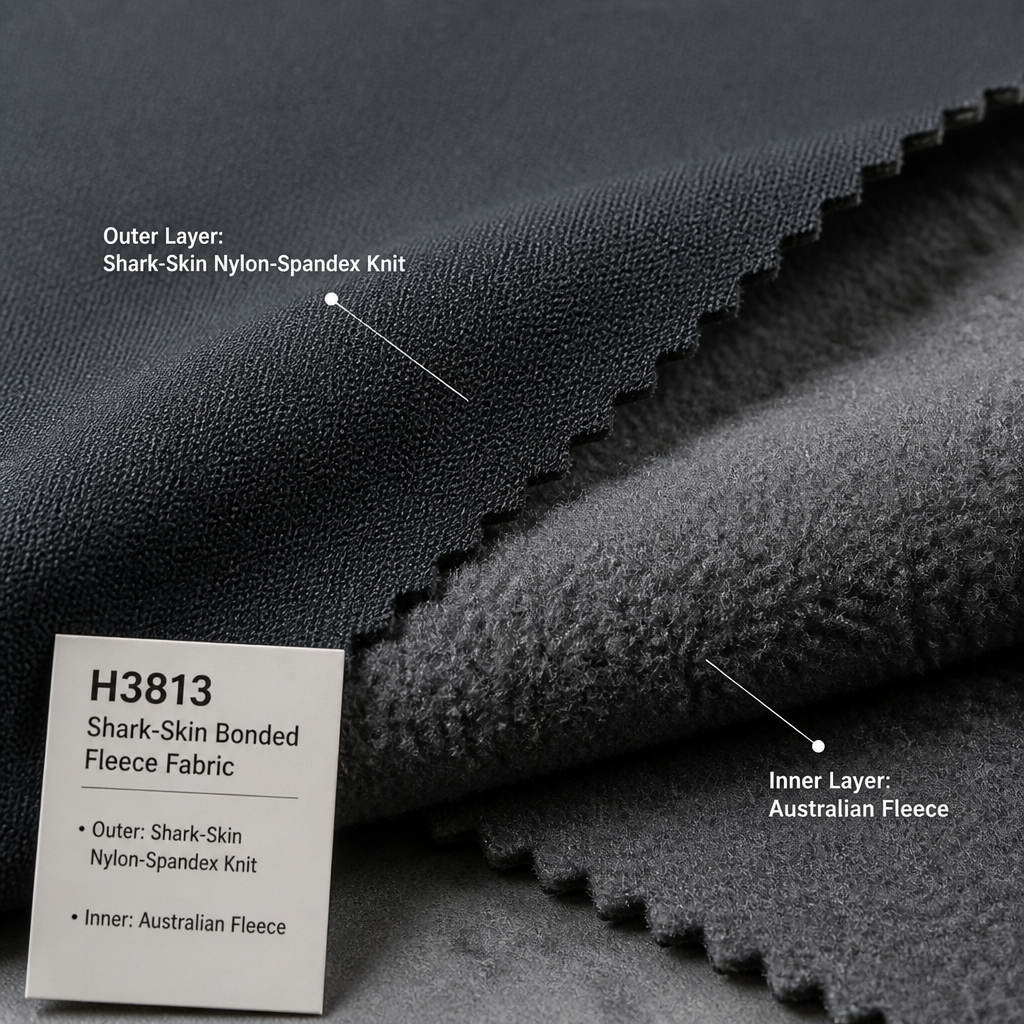
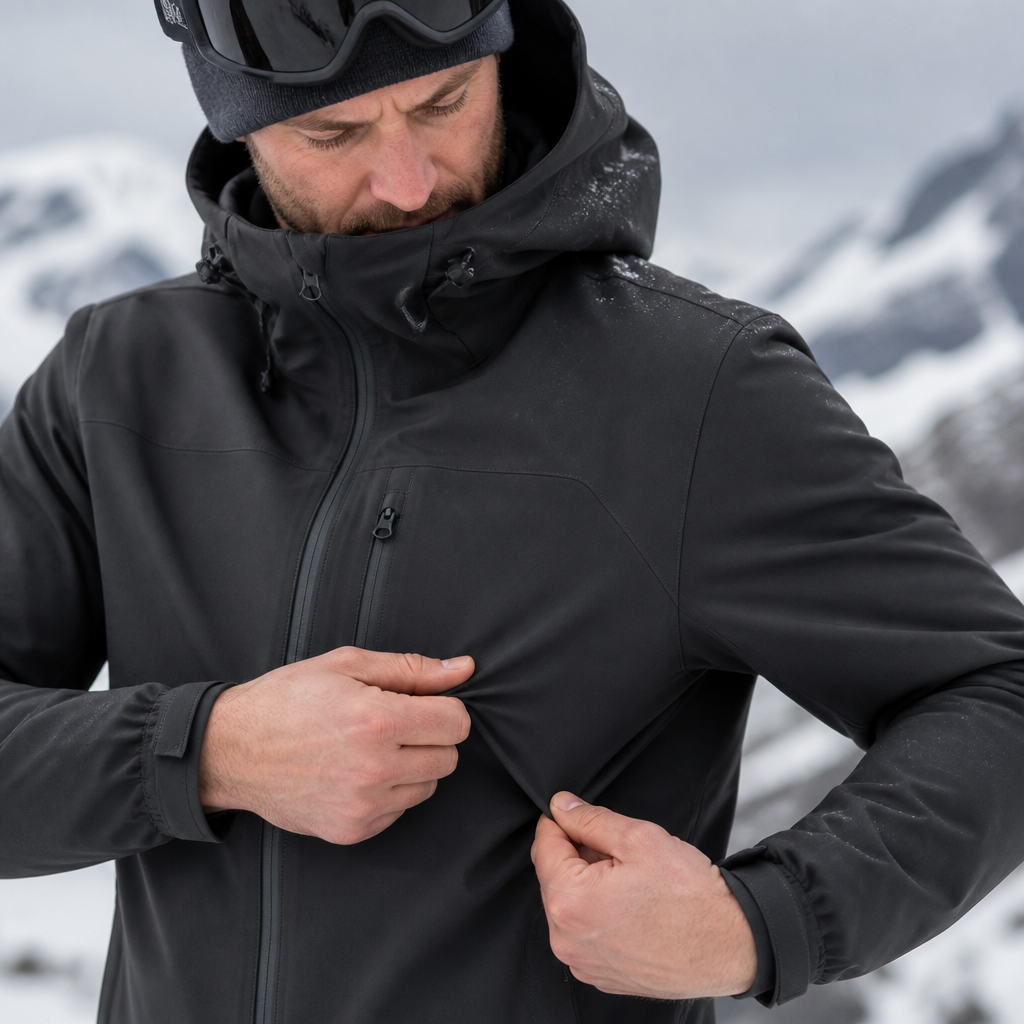
    H3813 is presented as a 430 GSM bonded fabric with an 80% nylon and 20% spandex outer layer and a fleece inner surface. It may suit winter leggings and fitted cold-weather activewear that need a substantial two-layer construction, but “extreme cold,” wind resistance, warmth, recovery, and durability must be defined and verified against the finished garment's actual use conditions.

    Start with the winter use case

    A buyer should first define whether the garment is intended for low-intensity commuting, outdoor training, a ski base layer, or casual winter wear. These scenarios place different demands on insulation, air permeability, moisture transfer, wind exposure, and freedom of movement.

    Fabric weight alone cannot establish a safe operating temperature. Perceived warmth also depends on air movement, humidity, activity level, garment fit, layering, coverage, and wearer physiology. Use a target temperature only when it is supported by an agreed garment test or controlled wear trial.

    Understand the bonded construction

    The supplied description identifies a dense nylon-spandex outer layer bonded to a fleece inner layer. This construction can combine a smoother exterior with a warmer next-to-skin surface, while the bond adds variables that do not exist in a single-layer knit.

    Before approval, buyers should inspect:

    • bond uniformity across the usable width;
    • local bubbling, delamination, or hard adhesive areas;
    • change in hand and flexibility after laundering;
    • edge behavior after cutting;
    • stretch and recovery of the complete bonded assembly;
    • compatibility between the outer layer, fleece, adhesive, and care cycle.

    Close view of H3813 bonded fleece fabric

    Treat composition and weight as starting data

    The stated 20% spandex content does not prove a specific compression level, four-way stretch, or recovery performance. Bonding can restrict the extension of the outer knit, and the weaker or less extensible layer may control the behavior of the complete fabric.

    Request stretch and recovery data for the bonded material—not only the outer face—and require the test direction, load or extension, hold time, recovery interval, and cycle count. If compression is part of the product brief, validate pressure and comfort on the finished garment across the intended size range.

    At 430 GSM, fabric mass should be considered early in product development:

    estimated fabric mass = garment fabric area × GSM

    Illustrative calculation, not ClothFactory production data: if a winter legging uses 1.20 m² of finished fabric before cutting loss, the fabric contribution is approximately 1.20 × 430 = 516 g. Actual consumption varies with usable width, marker efficiency, size ratio, direction requirements, and waste. This estimate helps the buyer evaluate garment weight and freight impact; it does not predict thermal performance.

    Verify warmth and wind claims separately

    A fleece surface can trap air within its raised structure, but the amount of insulation depends on pile geometry, compression, moisture, and the complete garment system. Ask for a defined thermal test or conduct controlled wear trials using the intended base layers and activity conditions.

    Likewise, a dense surface may reduce air movement without being windproof. If wind resistance matters, set an air-permeability requirement under a named method. If the product must resist rain or snow, specify water-related performance separately; wind resistance does not establish water resistance.

    Plan garment engineering around bulk and stretch

    Bonded 430 GSM fabric creates more seam bulk than a light single-layer knit. Production trials should determine the appropriate cutting method, needle, thread, stitch type, stitch density, seam allowance, and differential feed. Inspect the cut edge and seam after extension and laundering for separation, broken yarns, skipped stitches, tunnelling, and uncomfortable ridges.

    Flatlock construction may reduce a raised seam in some designs, but it is not automatically the correct solution. Seam strength, extension, bulk, machinery, and product appearance must be reviewed together.

    H3813 bonded fleece shown in a winter activewear application

    Set acceptance conditions before sampling

    A useful H3813 development brief should state:

    • garment type, activity level, and expected weather exposure;
    • intended layering system and fit;
    • finished composition, GSM tolerance, and usable width;
    • required stretch and recovery conditions;
    • dimensional stability after the agreed care cycle;
    • bond durability and appearance requirements;
    • pilling, abrasion, colorfastness, and air-permeability methods where relevant;
    • production color and any shade-specific approval requirements.

    Test the production-intent color because dyeing and finishing can affect hand and appearance. A result from one shade should not be applied automatically to every color.

    Common sourcing mistakes

    • Assigning an “extreme cold” temperature rating from GSM alone.
    • Calling the fabric windproof without an agreed air-permeability criterion.
    • Testing only the outer knit instead of the finished bonded structure.
    • Assuming high spandex content guarantees recovery or compression.
    • Approving a small swatch without sewing and laundering a complete garment.
    • Ignoring bond durability when setting the care label.

    Procurement next step

    Send the supplier a written end-use brief and request full finished-fabric data plus enough yardage for a production-representative prototype. Compare warmth, mobility, seam comfort, bond stability, drying behavior, and appearance under the same test and wear conditions. H3813 should move to bulk approval only when those results meet the garment's defined winter-use requirements.