分类: Fabric Knowledge

  • Geometric Brick Interlock for Structured Activewear

    Geometric Brick Interlock for Structured Activewear


    Precision Fine-Grid Interlock is a 165 g/m² nylon-spandex interlock (78% nylon, 22% spandex, 165 cm nominal width) for activewear that needs a visibly structured surface, controlled stretch and more body than a lightweight jersey. Its raised geometric brick pattern is a visual feature, not proof of compression or support. Buyers should qualify the fabric through finished measurements and garment trials because appearance alone does not establish recovery, pilling resistance or wash stability.
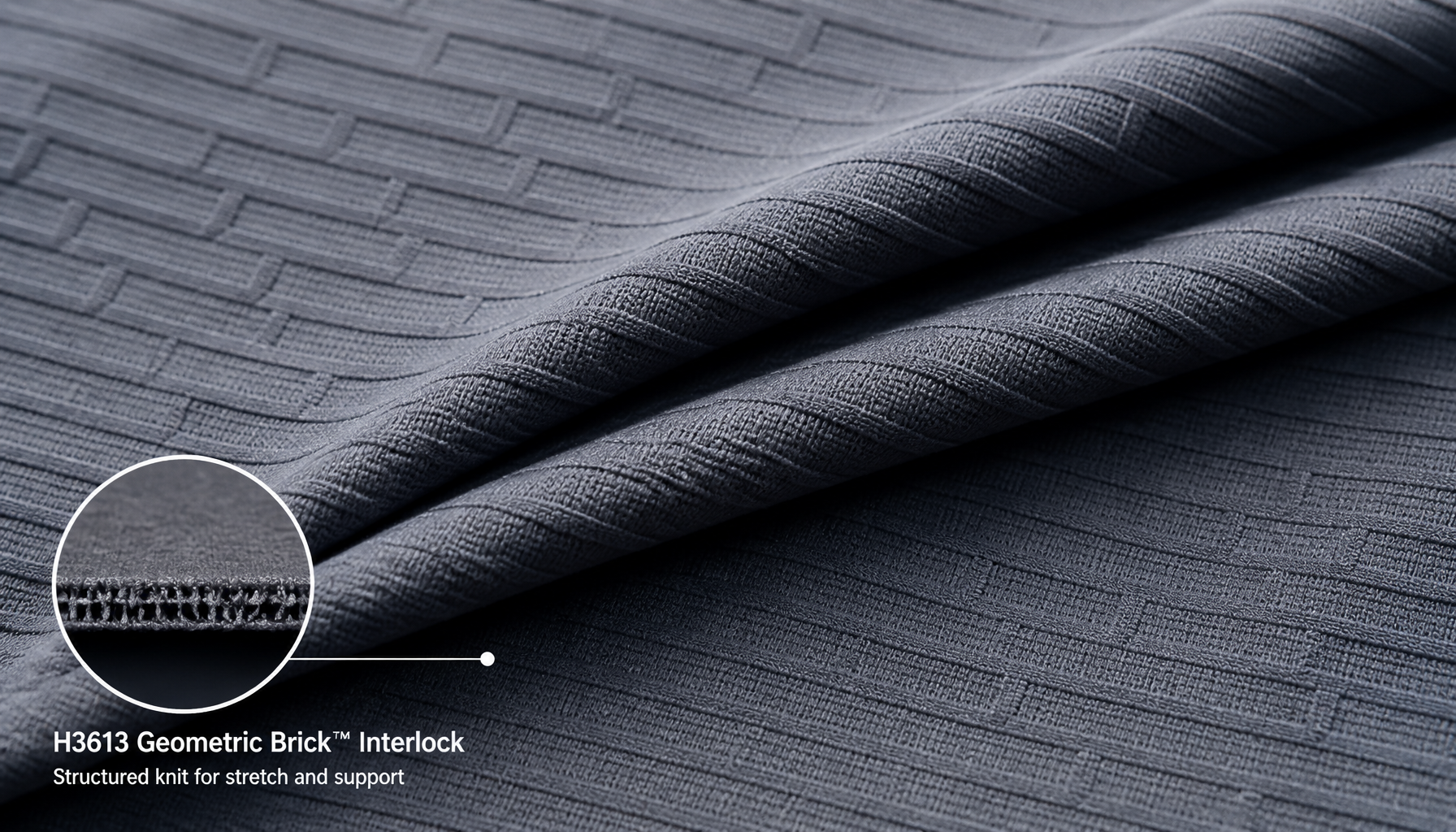
    Illustration: Close-up view of geometric brick interlock fabric for activewear development
    Illustrative image; not a test record or production evidence.

    Where This Structure Fits

    The raised geometric surface can support sports bras, fitted training tops, leggings panels and shapewear details where visual texture is part of the design brief. Interlock construction generally provides a more stable face and back than a single jersey, but the finished result still depends on yarn selection, stitch density, elastane content and finishing. A buyer should describe the garment zone, target support and required stretch direction instead of requesting “structured fabric” without measurable conditions. Treat the catalogue GSM and width as nominal until they are verified on the approval sample.

    Separate Appearance From Performance

    Texture changes how light and color move across a garment, which can make a solid shade look more dimensional. It can also affect printing, bonding, seam appearance and abrasion at raised points. None of those effects can be accepted from a swatch photograph. Review the fabric flat, stretched and sewn, then assess whether the motif distorts at the extension expected in the finished garment.
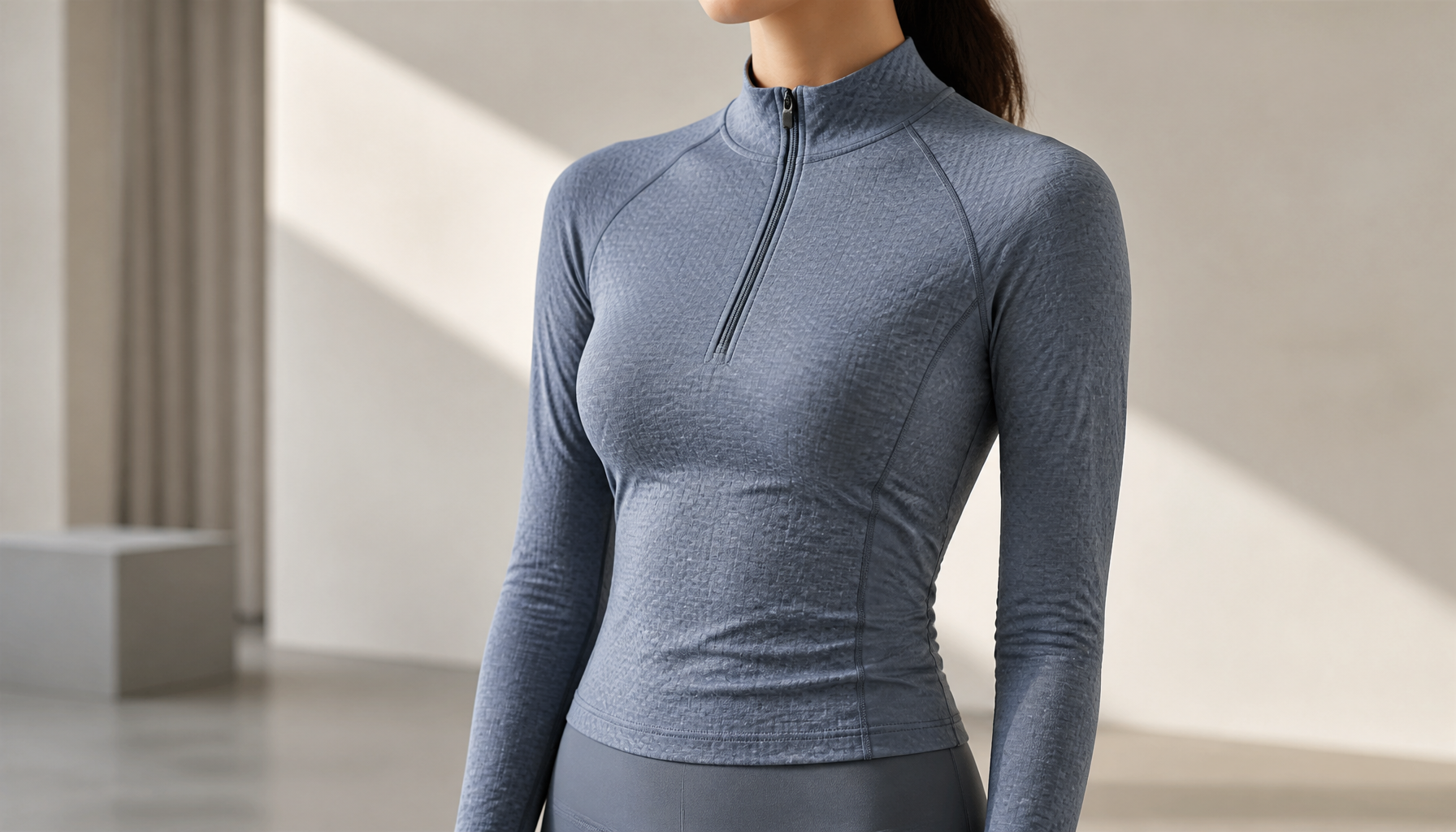
    Illustration: Structured geometric interlock shown in a technical activewear application
    Illustrative image; not a test record or production evidence.

    Build a Comparable Sample Request

    Ask the supplier to state fiber composition, finished GSM, usable width, stretch and recovery by direction, color, surface finish and applicable care conditions. Define how the sample will be evaluated: relaxed and stretched appearance, opacity, seam response, dimensional change after laundering and surface change after abrasion or pilling exposure. The sampling basis for the stretch element is covered in how many samples buyers should test for stretch ratio. Functional finishes should be listed separately and treated as optional until their application and durability are confirmed.

    Use a Garment-Level Decision

    A lab result cannot show whether the textured surface remains balanced across curved panels or under elastic tension. Cut the candidate into the intended pattern, keep seam type and sewing settings consistent, and compare fit after the same conditioning and wash sequence. For an illustrative comparison, if two samples have equal relaxed width but one grows after repeated extension, the apparently similar fabrics will not hold the same garment dimensions.

    Buyer Risk Check

    • Do not infer compression from a firm hand feel.
    • Do not approve bulk color from an unconditioned digital image.
    • Do not compare stretch percentages measured with different loads or holding times.
    • Check raised areas for snagging, glazing and visible wear at garment contact points.
    • Confirm that the approved sample represents the same yarn, construction and finish planned for bulk production.

    Information to Send Before Sampling

    Provide the garment type, panel location, target GSM and usable width, required stretch directions, intended color, desired surface definition, care procedure and acceptance tests. Submit those requirements to ClothFactory through the contact page, and ClothFactory can then screen Precision Fine-Grid Interlock and prepare an appropriate sample. Bulk approval should follow only after the physical fabric and sewn prototype meet the written specification.
  • Fish-Scale Textured Fabric for Performance Polo Shirts

    Fish-Scale Textured Fabric for Performance Polo Shirts


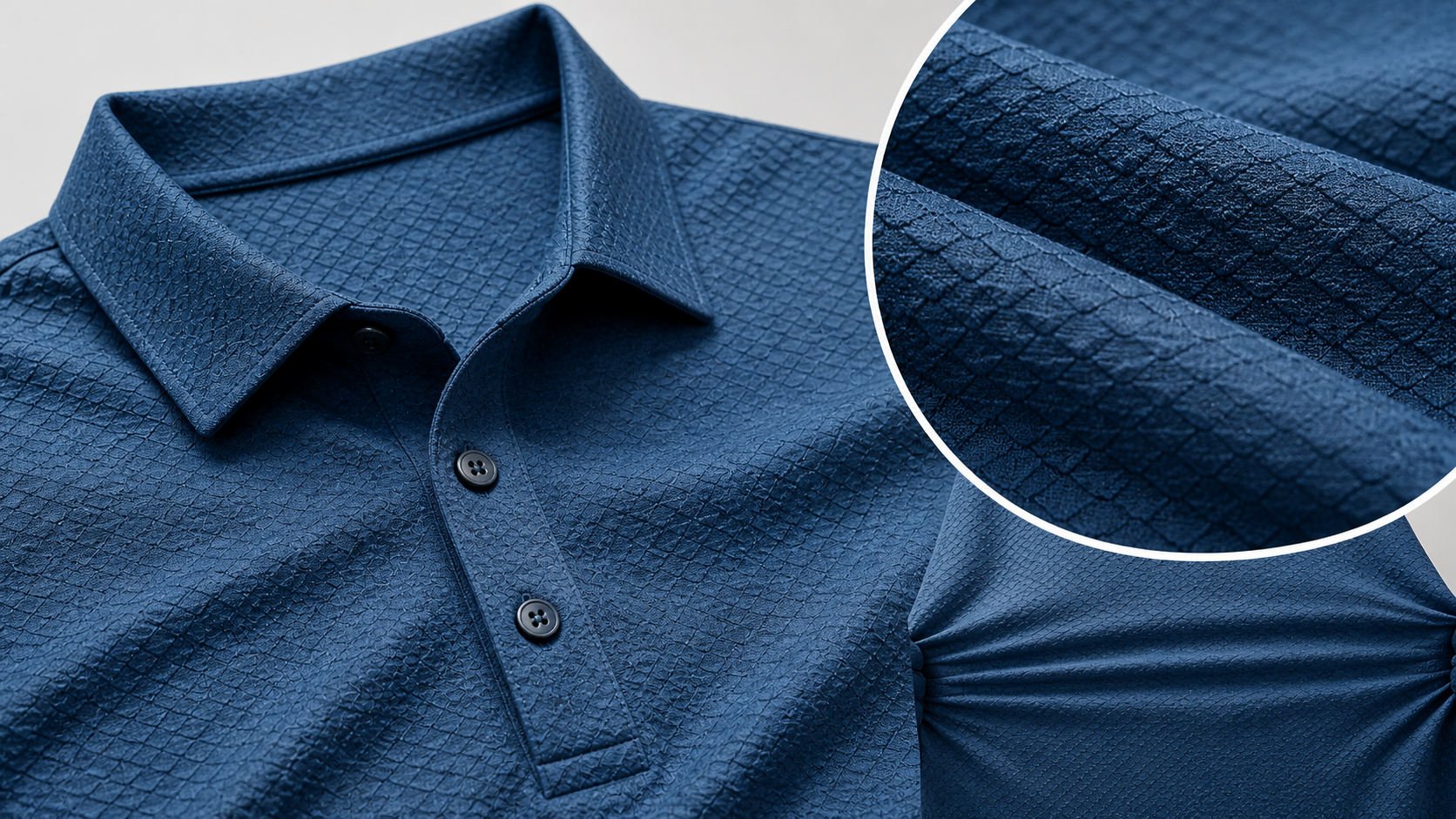
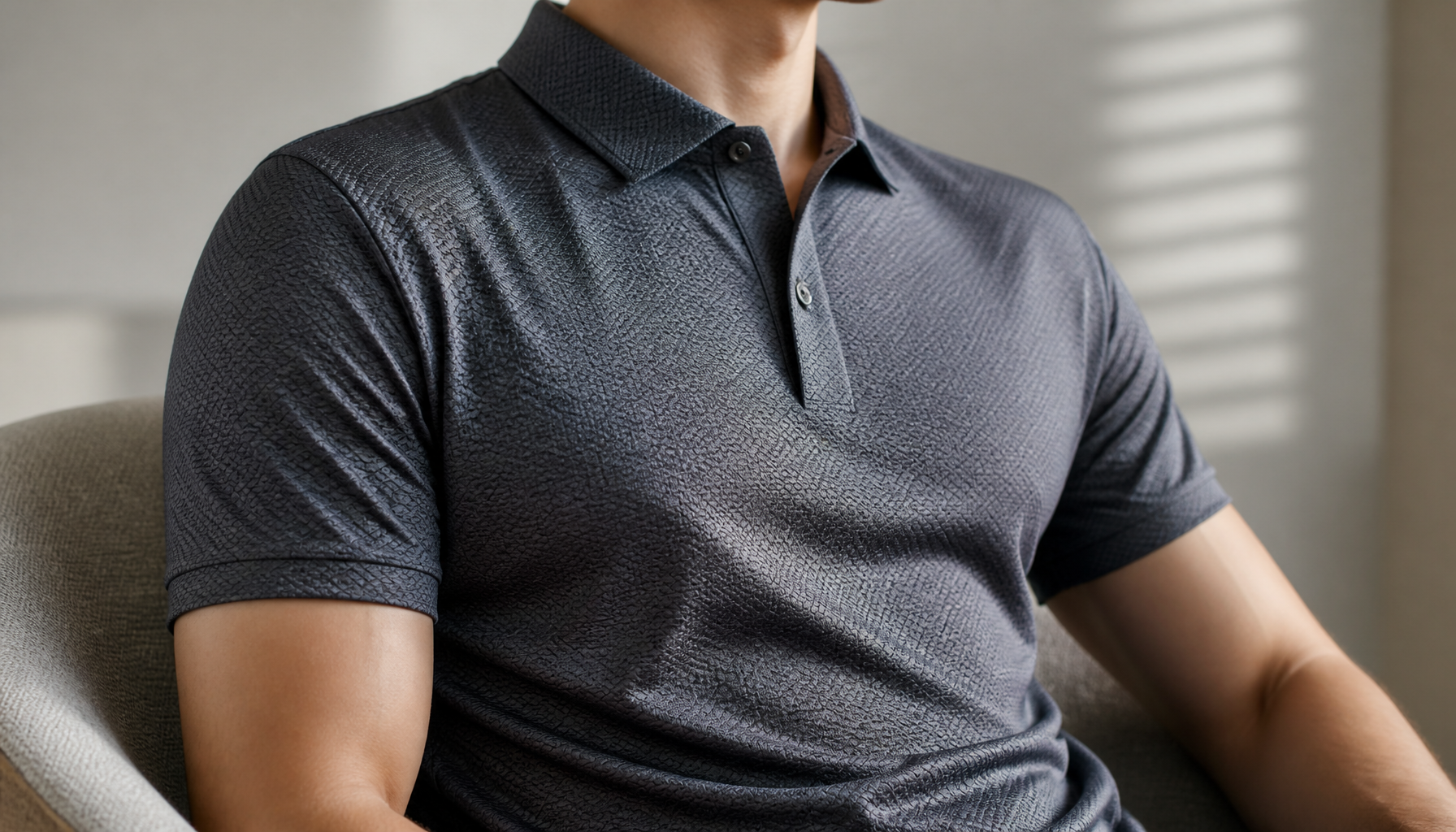
    Fish-Scale Pique Nylon Spandex Fabric is a 180 g/m² knit (83% nylon, 17% spandex, 165 cm nominal width) that gives performance polos a distinctive surface. The texture should be approved together with stretch, dimensional stability, snagging risk and moisture-management requirements. Buyers should treat visual ventilation and actual drying performance as separate questions unless comparable test data confirms both.

    Illustration: Close-up of fish-scale textured knit fabric for performance polo development
    Illustrative image; not a test record or production evidence.

    Why the Texture Matters

    The fish-scale effect creates highlights and shadow across a solid color, helping a polo look differentiated without relying on a printed graphic. “Bio-Armor” is a trade name; it does not by itself establish biological origin, antimicrobial performance or certification. The same relief can influence collar compatibility, placket appearance and contact abrasion. Review the pattern at garment scale because a texture that looks balanced on a small swatch may appear too dominant across a full front panel or distort around seams. Catalogue values are nominal; confirm finished GSM and usable width on the approval sample.

    Convert the Design Brief Into Specifications

    Do not source this fabric by surface name alone. State the required fiber composition, finished GSM, usable width, stretch direction, recovery condition, hand feel, color and care procedure. If airflow, quick drying or moisture management is important, identify the required test method and acceptance condition. A textured surface can create air spaces, but that observation does not by itself establish a performance claim.

    Illustration: Fish-scale knit texture evaluated for a performance polo shirt
    Illustrative image; not a test record or production evidence.

    Evaluate the Polo as a System

    The body fabric must work with the collar, placket, interlining, thread and seam construction. A soft, extensible body paired with a rigid collar may pull out of alignment after laundering; a heavier texture may also affect placket drape. Produce a sewn prototype and check front-panel hang, collar balance, seam puckering, recovery at the hem and dimensional change under the intended care cycle. For a related polo quality, see fine-rib nylon spandex for performance polo shirts.

    Compare Commercial Risk, Not Just Price

    Two textured fabrics with similar quoted GSM can produce different usable yields if their widths, shrinkage allowances or defect rates differ. Use the same pattern and size ratio for marker comparison, and calculate consumption from usable rather than nominal width. A lower price per kilogram can be offset by extra cutting loss, shade separation or rejected panels, so the purchase decision should use acceptable-garment cost.

    Buyer Risk Check

    • Confirm whether the texture remains clear after dyeing and finishing.
    • Check snagging and pilling at shoulder, underarm and bag-contact zones.
    • Evaluate shade under more than one lighting condition.
    • Test darker and lighter colorways separately when appearance or heat exposure matters.
    • Require bulk to match the approved construction and finishing route.

    Sampling Brief

    Send the polo silhouette, intended market, target hand feel, GSM and width requirements, color standard, stretch direction and care label. Add separate acceptance criteria for dimensional stability, colorfastness, pilling or snagging, and any claimed moisture function. ClothFactory can use that brief, submitted through the contact page, to assess the fabric without presenting an unverified surface effect as confirmed performance.

  • Micro-Perforated Fabric for High-Intensity Activewear

    Micro-Perforated Fabric for High-Intensity Activewear


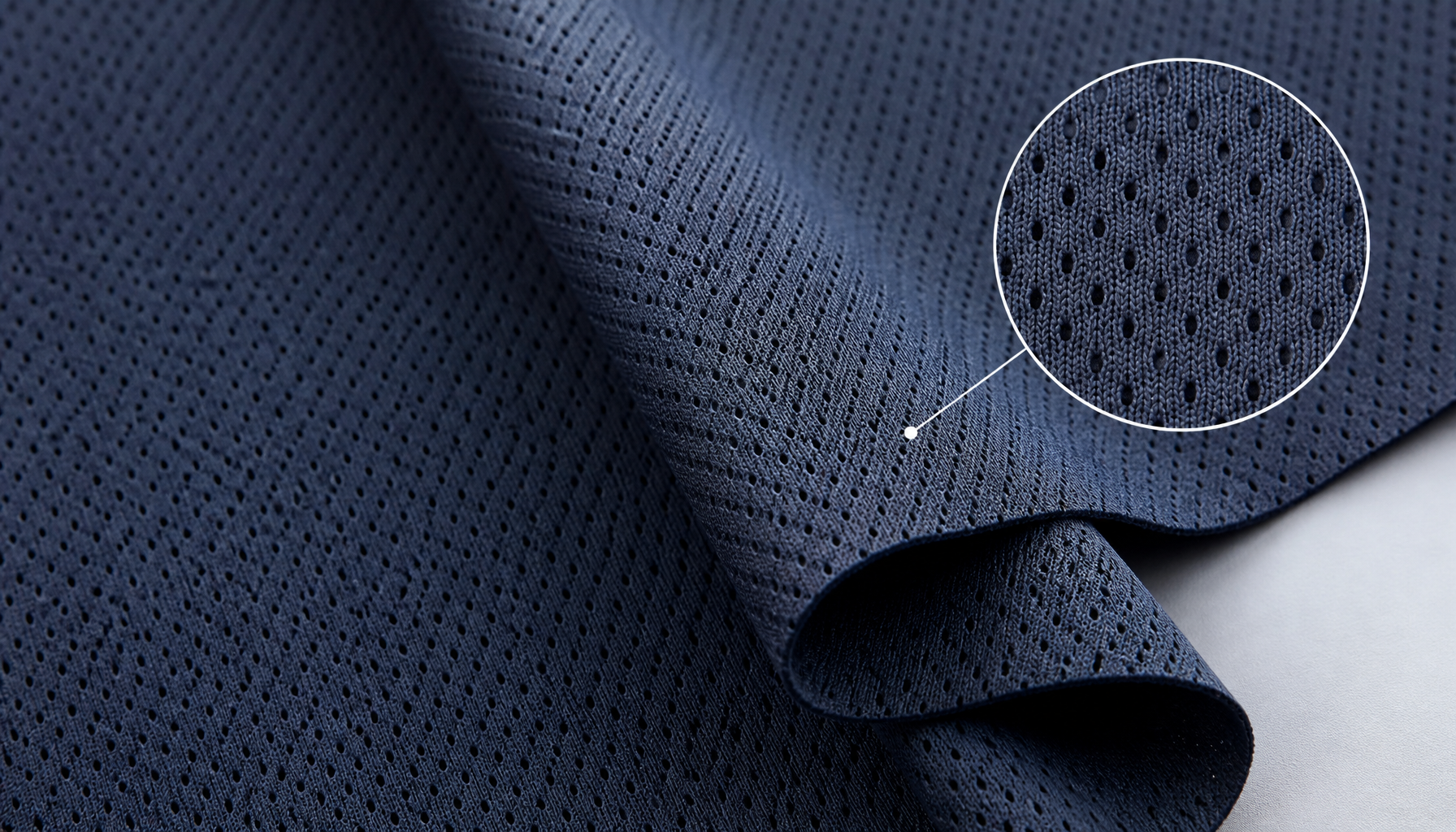
    Perforated Breathable Nylon Spandex Fabric is a 170 g/m² nylon-spandex knit (83% nylon, 17% spandex, 165 cm nominal width) intended for activewear zones where air exchange and low bulk are priorities. The perforated appearance is a design feature, not evidence of airflow. Buyers still need controlled tests for air permeability, drying behavior, stretch recovery and durability before making ventilation or comfort claims.

    Illustration: Micro-perforated stretch fabric prepared for high-intensity activewear
    Illustrative image; not a test record or production evidence.

    Choose the Garment Zone First

    Micro-perforated fabric can be considered for training-shirt bodies, ventilation panels, sports-bra inserts and other areas exposed to heat and perspiration. The correct placement depends on coverage, support and abrasion requirements. Catalogue values are nominal; confirm finished GSM, hole pattern, repeat direction and usable width on a production-equivalent sample. A fabric suitable for an upper-back panel may not provide enough opacity or stability for a high-tension lower-body application, even when both products are described as activewear.

    Define Airflow as a Measurable Requirement

    Visible holes do not quantify airflow. Ask for the test method, specimen condition, pressure differential and reported unit when comparing air-permeability results. Values obtained under different methods or pressure settings are not directly comparable. If quick drying is also required, evaluate it separately because air permeability, liquid spreading and drying rate describe different moisture-transfer mechanisms. Related training-shirt options are described in custom fabric options for high-performance training shirts.

    Check Stretch Around the Perforations

    Perforations concentrate strain along their edges. During sampling, examine whether openings elongate unevenly, remain enlarged after extension or initiate snagging and laddering near seams. Record stretch and recovery in both directions under one agreed procedure. The sample should also be inspected after the intended wash and drying sequence because heat and finishing can change dimensions and surface response.

    Illustration: Micro-perforated fabric assessed in an activewear garment application
    Illustrative image; not a test record or production evidence.

    Balance Ventilation, Coverage and Yield

    A more open structure can improve airflow while reducing visual coverage and increasing sensitivity to pattern placement. For an illustrative garment review, stretch the candidate to the extension measured at the intended body zone and place it over the planned lining or skin-tone reference. This does not replace a formal test, but it exposes whether ventilation has been gained at the expense of opacity or seam stability.

    Buyer Risk Check

    • Do not translate “micro-perforated” directly into a breathability claim.
    • Confirm usable width and whether edge distortion reduces marker efficiency.
    • Check needle selection and seam type on the actual fabric.
    • Evaluate abrasion and snagging at raised or open areas.
    • Verify optional wicking, cooling or antibacterial finishes separately and after the agreed laundering condition.

    Sampling Brief

    Provide the garment type, panel location, target GSM, usable width, stretch directions, coverage requirement, color, finishing request and care procedure. Define which results must be tested on fabric and which must be confirmed on a sewn prototype. Submit the brief through the contact page so ClothFactory can evaluate the fabric against it rather than relying on the product name as proof of performance.

  • Does Polyester Shrink in the Wash?

    Does Polyester Shrink in the Wash?


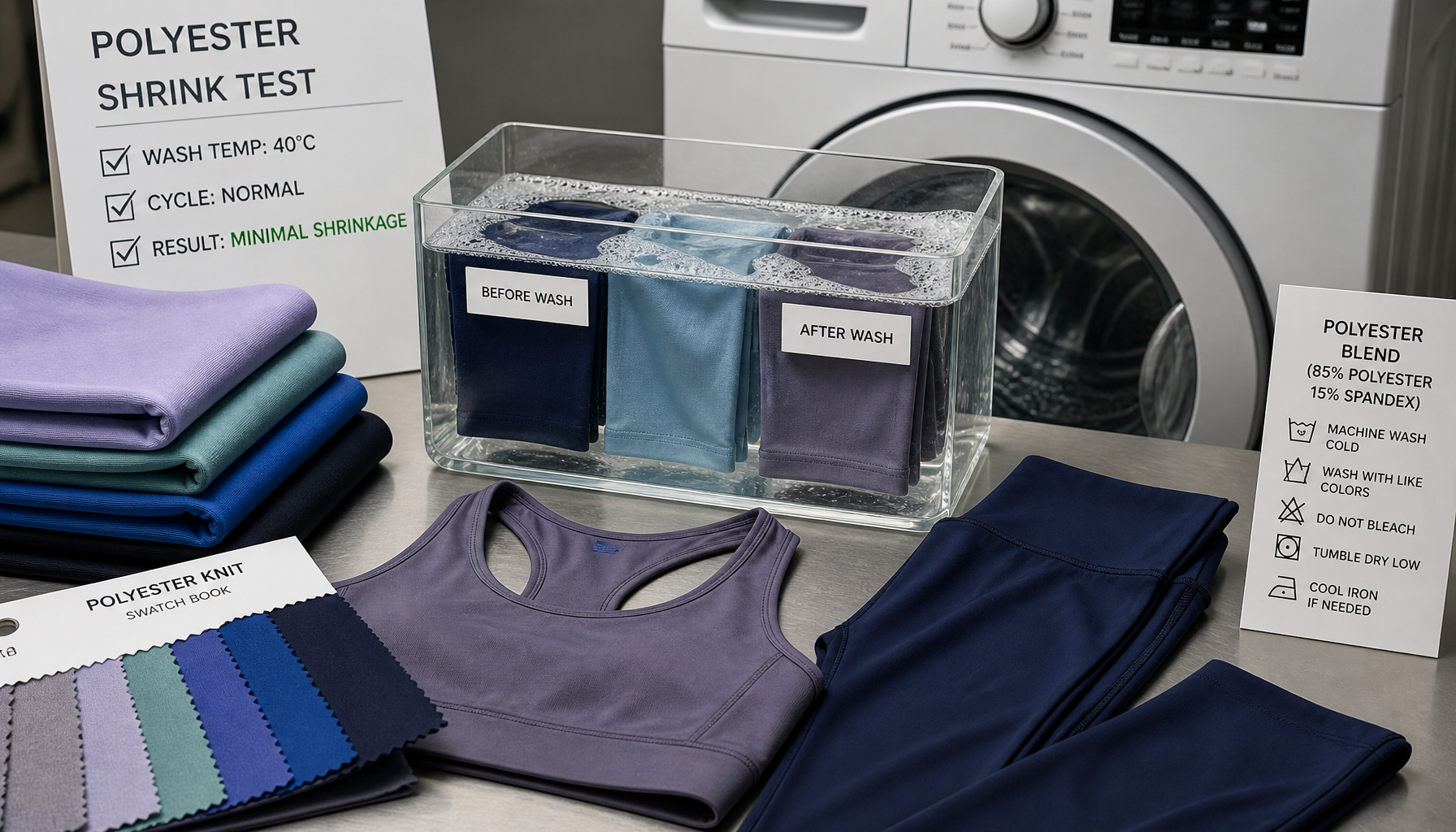
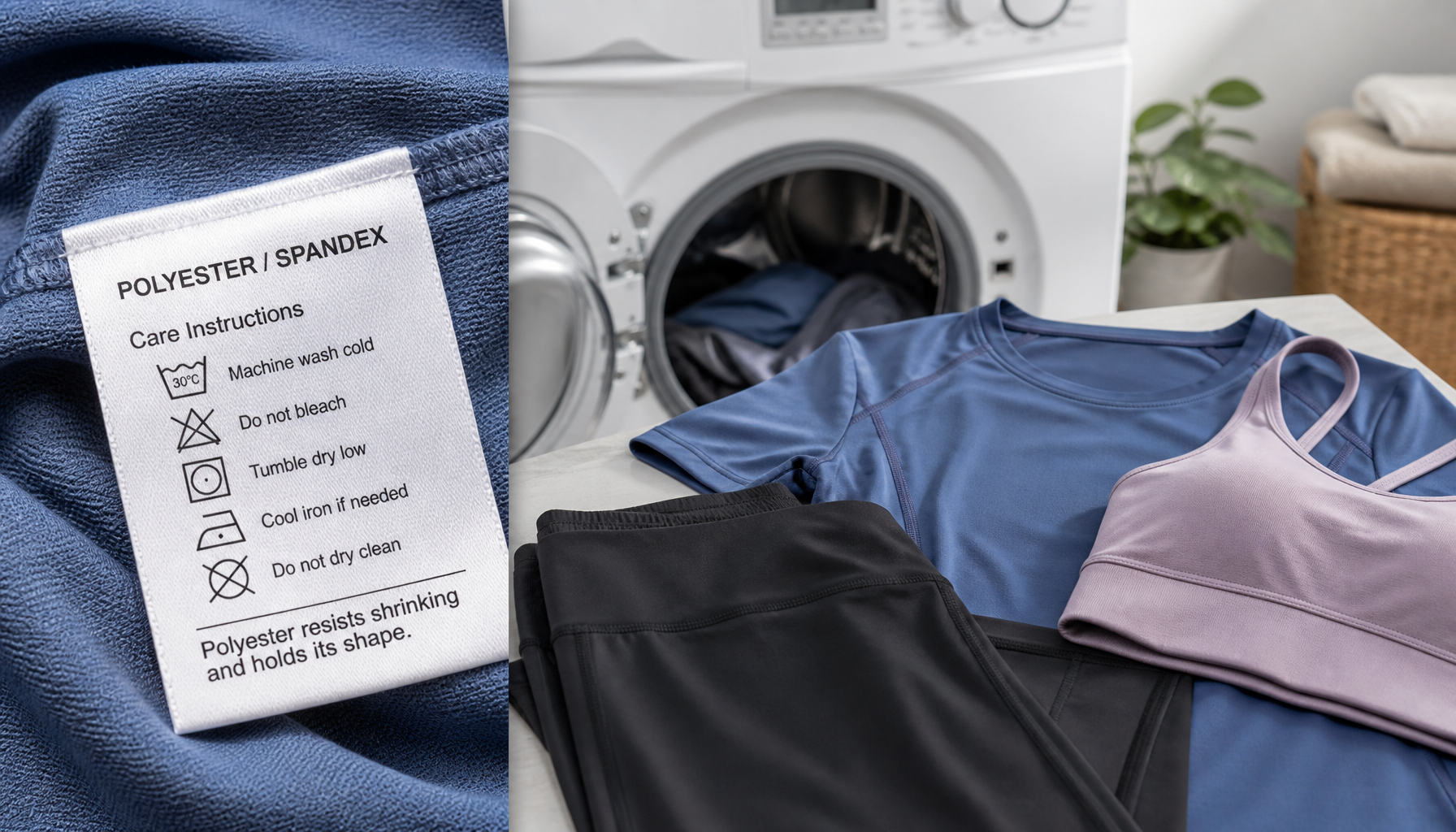
    Polyester fiber is generally dimensionally stable under ordinary care, but a polyester or polyester-spandex garment can still shrink, grow or distort because of knit relaxation, heat setting, finishing, elastane behavior and laundering conditions. Apparel buyers should approve dimensional change on the finished fabric and garment under the intended care method instead of relying on fiber content alone. This guidance applies to knitted polyester and polyester-spandex apparel fabrics; woven or industrial polyester products may follow different care and test routes.

    Fiber Stability Is Not Garment Stability

    Polyester absorbs relatively little water compared with many natural fibers, so water-induced fiber swelling is not usually the main source of dimensional change. Knitted loops can still relax after tension from knitting, dyeing or finishing is released. A fabric may become shorter and wider, narrower and longer, or skewed rather than shrinking uniformly in both directions.

    Illustration: Polyester stretch fabric prepared for a controlled laundering trial
    Illustrative image; not a test record or production evidence.

    Heat Changes the Risk

    High washing or drying temperatures can alter dimensions, surface appearance and elastane performance, especially when care conditions exceed those used to stabilize the fabric. Do not describe all polyester as heat-proof. Record water temperature, cycle, detergent, load, drying method and number of cycles in the approval procedure, then use the same conditions when comparing development and bulk samples.

    Construction and Finish Matter

    Stitch density, yarn type, fabric weight, elastane, brushing and chemical finishing influence relaxation and recovery. Polyester blended with cotton, viscose or another fiber can also reflect the dimensional behavior of that component. A result from plain polyester jersey should not be transferred to a brushed polyester-spandex interlock merely because polyester is the largest percentage in both.

    Measure Directional Change

    Mark and measure specimens before and after the defined care procedure. An illustrative calculation is dimensional change (%) = (after-care dimension − initial dimension) ÷ initial dimension × 100. A negative value indicates shrinkage under that convention and a positive value indicates growth. The report should state the convention because some laboratories reverse the sign or report shrinkage as an unsigned value. Common laboratory routes use ISO 6330 for domestic washing and drying procedures and ISO 3759 for preparing, marking and measuring specimens; the buyer must still agree the cycle and acceptance value. For a like-for-like comparison, see how buyers can compare supplier reports for dimensional shrinkage.

    Illustration: Marked polyester fabric measured after laundering for dimensional change
    Illustrative image; not a test record or production evidence.

    Validate the Finished Garment

    Fabric data cannot fully predict garment response where seams, rib trims, elastic, prints or mixed panels restrict movement. Wash a production-representative sample and measure key points such as body length, chest width, sleeve, waistband and inseam. Inspect twisting, seam puckering and differential shrinkage in addition to size change. Repeat the review after any material or care-label revision.

    Buyer Risk Check

    • Do not approve “preshrunk” without a defined test result.
    • Do not compare results from different care procedures.
    • Check length and width separately.
    • Record growth and distortion, not only shrinkage.
    • Test the intended color and finish when processing differs.
    • Keep the approved fabric and garment reports with the bulk specification.

    Procurement Requirement

    Give ClothFactory the target construction, composition, GSM, usable width, finish and intended care method through the contact page when requesting samples. Define acceptable dimensional change for the garment rather than applying a universal polyester limit. The final care label and bulk release should be supported by results from the production-representative fabric and sewn product.

  • Pique vs Interlock vs Rib for Garment Development

    Pique vs Interlock vs Rib for Garment Development


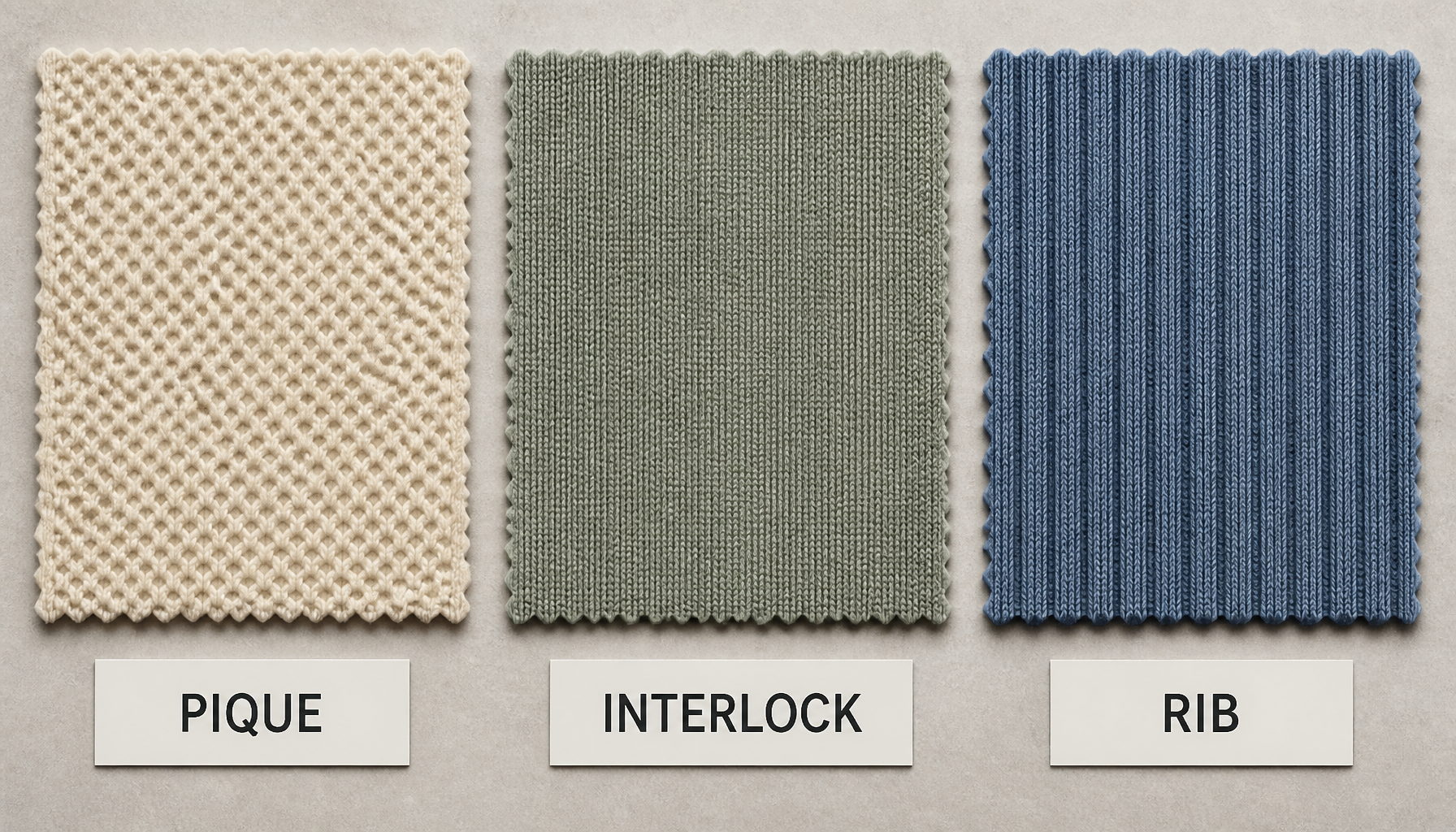
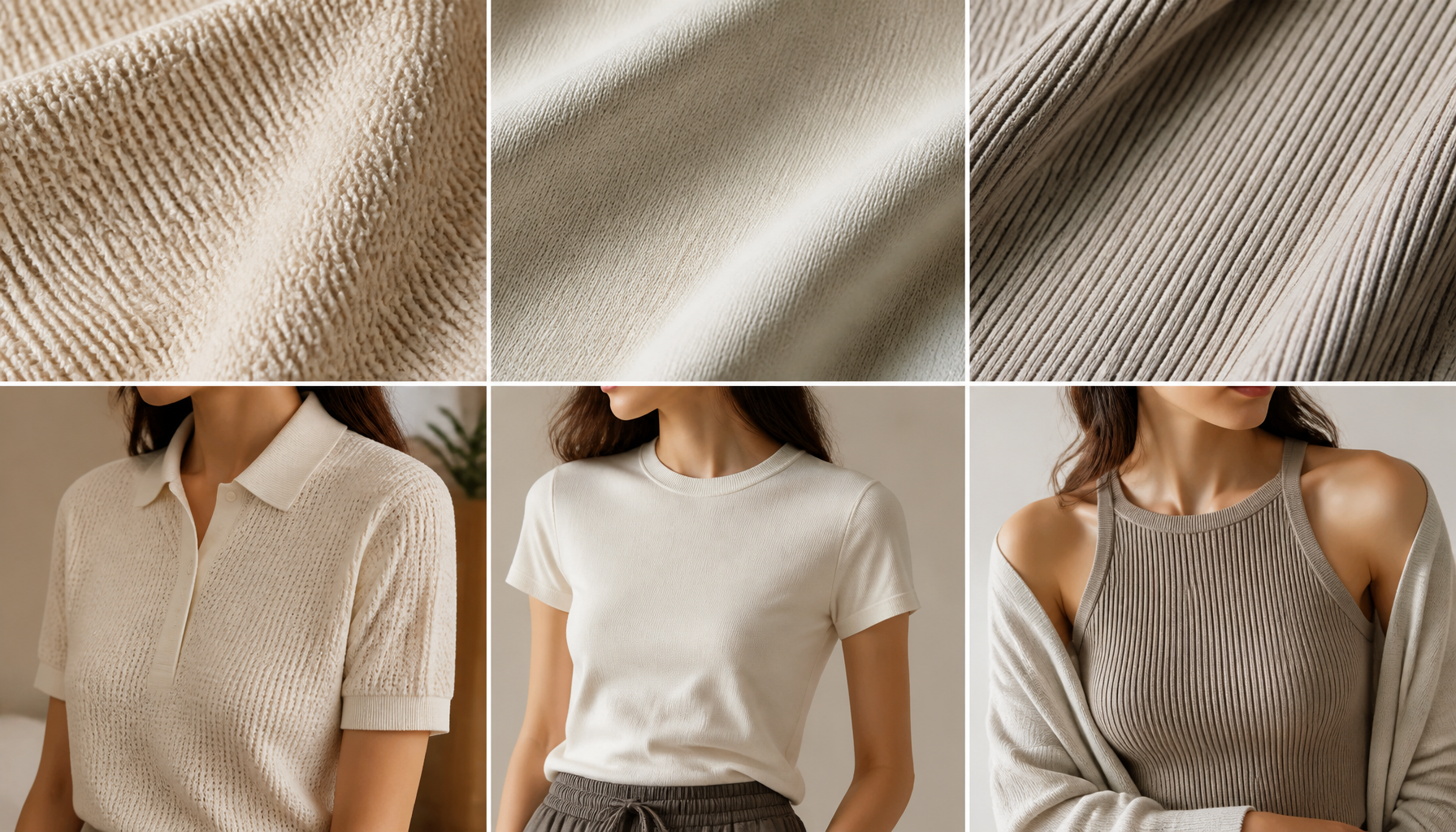
    Pique, interlock, and rib should be compared by the garment function they must deliver, not by a fixed ranking. Structure influences texture, stability, stretch direction, edge behavior, coverage, and production handling, but yarn, density, composition, GSM, and finishing can change each result.

    Pique, interlock and rib knit structure reference

    Pique: texture with construction-dependent openness

    Pique uses a raised or recessed surface pattern that can provide visual depth and alter skin contact. It is widely associated with polos and sports tops, but the structure name does not guarantee airflow or moisture management.

    Buyers should inspect snagging, pilling, texture consistency, air permeability where required, and placket or seam appearance. Directional texture may restrict marker rotation and affect garment yield.

    Interlock: two-sided stability with added mass potential

    Interlock is a double-knit structure with usable surfaces on both sides and generally controlled edge behavior. It can suit fitted tops, leggings, linings, or supportive panels when a smoother, more stable construction is required.

    That stability may come with additional thickness or mass, depending on yarn and density. Confirm drape, drying, seam bulk, stretch force, recovery, and dimensional stability rather than assuming every interlock is heavy or supportive.

    Rib: directional texture and high extension potential

    Rib structures form visible wales and often extend readily across the ribs. They are common in collars, cuffs, waistbands, fitted tops, and full-garment fashion activewear.

    High extension does not prove recovery or support. Inspect coverage as ribs open, force at garment extension, residual growth, direction alignment, curling, and seam behavior. A rib suitable for a cuff may not work as a legging body.

    Compare structures using the same dimensions

    Decision area Pique Interlock Rib
    Visual surface Textured, pattern-dependent Usually smoother and two-sided Vertical or directional ridges
    Key sampling risk Snagging, texture alignment, placket appearance Bulk, drying, seam thickness Opening under stretch, growth, direction mismatch
    Typical development question Does texture support the polo or sports-top design? Does stability justify weight and seam bulk? Does extension retain coverage and recovery?
    Required measurements Construction, GSM, width, airflow if claimed Thickness, GSM, stretch force, recovery Stretch, force, recovery, coverage under extension

    This table describes development questions, not guaranteed performance. Test the actual finished candidates under identical conditions.

    Knit structures applied to garment-development samples

    Include manufacturing and costing

    Structure affects spreading, cutting, panel direction, edge control, sewing, bonding, and decoration. Run production trials with the intended needle, thread, stitch, seam, and heat process. Record usable width, shrinkage, directional restrictions, and defect allowance for costing.

    Price per kilogram cannot show garment yield when structures differ in width, mass, or marker orientation. Compare cost per accepted garment after conditioning and production loss.

    Procurement next step

    Send the supplier the garment panel, fit, expected extension, target hand and weight, color, care cycle, decoration method, and required performance. Request identified pique, interlock, and rib candidates only where each structure can meet the same brief. Compare data and washed garment samples before selecting the construction for bulk production.

  • Nylon Spandex vs Polyester Spandex for Activewear

    Nylon Spandex vs Polyester Spandex for Activewear


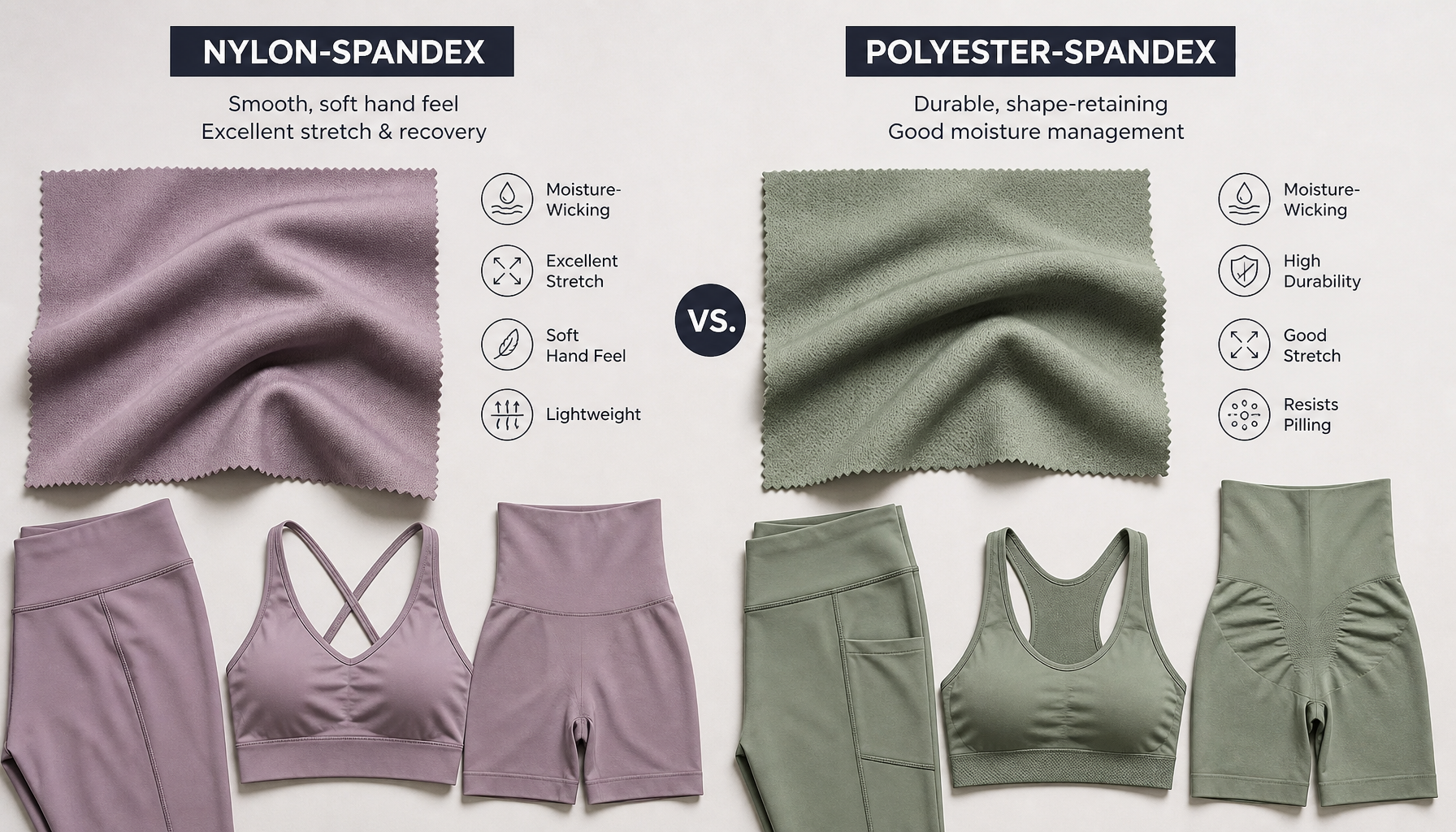
    Choose nylon-spandex or polyester-spandex by comparing the finished fabric against the garment's hand, stretch-force, recovery, moisture, color, durability, and cost requirements. Fiber family is a useful starting point, but it does not determine performance without yarn, knit construction, finishing, and test conditions.

    Nylon-spandex and polyester-spandex fabric comparison reference

    Start with the garment decision

    A yoga legging, sports bra, fitted training top, and team jersey place different loads on fabric. Define the body zones, expected extension, fit, color range, care cycle, and required claims before choosing the fiber family.

    Nylon-spandex is often shortlisted when a smooth, soft hand is central to the product brief. Polyester-spandex can be shortlisted where the development programme emphasizes particular dyeing, repeated-use, or moisture objectives. These tendencies must be confirmed on finished samples; neither blend is automatically softer, quicker drying, more durable, or more supportive.

    Compare finished constructions, not generic fibers

    Decision area Nylon-spandex candidate Polyester-spandex candidate Required confirmation
    Hand and surface Often selected for smooth next-to-skin styles Can be engineered across a wide range of hands Approved finished swatch before and after washing
    Stretch and recovery Depends on yarn, spandex placement and knit Depends on yarn, spandex placement and knit Direction, force or load, cycles and recovery time
    Moisture behavior Must be measured on the construction Must be measured on the construction Wicking, spreading or drying method tied to claim
    Color and heat response Dyeing and finishing conditions matter Dyeing and finishing conditions matter Shade, colorfastness and process compatibility
    Durability Construction and surface control pilling and abrasion Construction and surface control pilling and abrasion End-use abrasion, pilling and snagging tests

    This comparison avoids a common error: attributing a result to nylon or polyester when it was actually produced by construction or finishing.

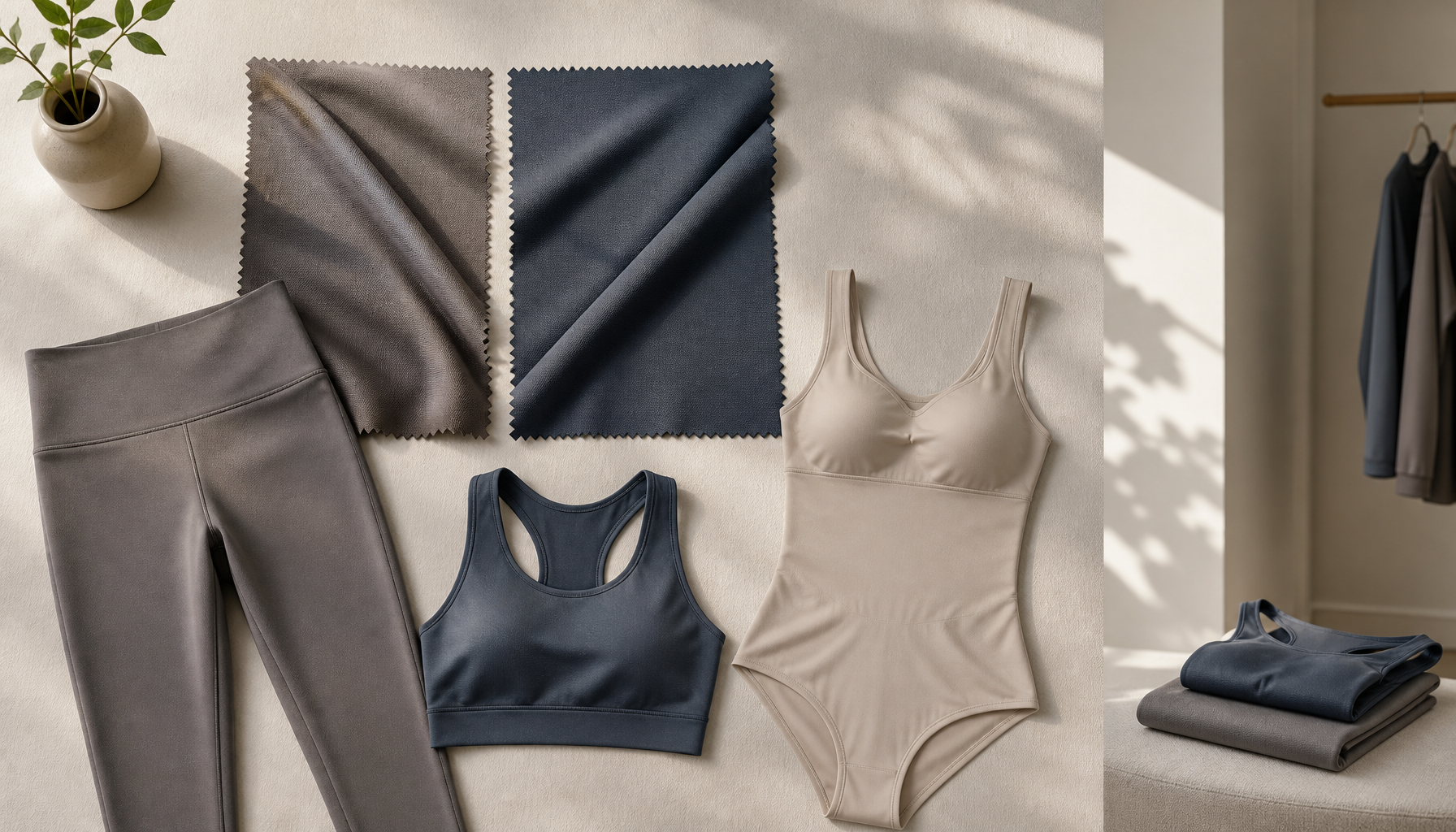
    Activewear fabric application comparison

    Treat GSM and spandex percentage as incomplete inputs

    GSM helps estimate fabric mass and often affects coverage, but it does not specify thickness, density, opacity, or support. Spandex percentage does not define maximum stretch, force at garment extension, or recovery. Two blends with similar labels can behave differently because their yarn sizes and knit geometries differ.

    Record finished GSM, usable width, thickness where relevant, and conditioned test results. Evaluate coverage in the selected colors and at the extension expected in the garment.

    Compare commercial cost through garment yield

    Price per kilogram is not enough. Usable width, shrinkage, edge loss, shade grouping, defect allowance, and marker efficiency determine cost per accepted garment. Finishes may also add cost and require post-wash validation.

    Do not assume a typical MOQ or lead time. Request current terms for the selected construction, color count, and development route, because those conditions are order-specific.

    Procurement next step

    Send identical briefs for nylon-spandex and polyester-spandex candidates. Include garment type, fit, expected extension, hand reference, target GSM and width, colors, care cycle, required tests, and planned claims. Compare identified finished swatches, measured data, and washed garment samples before choosing the fiber family or approving bulk production.

  • Engineered Vertical Stripe Knit for Athletic Wear

    Engineered Vertical Stripe Knit for Athletic Wear


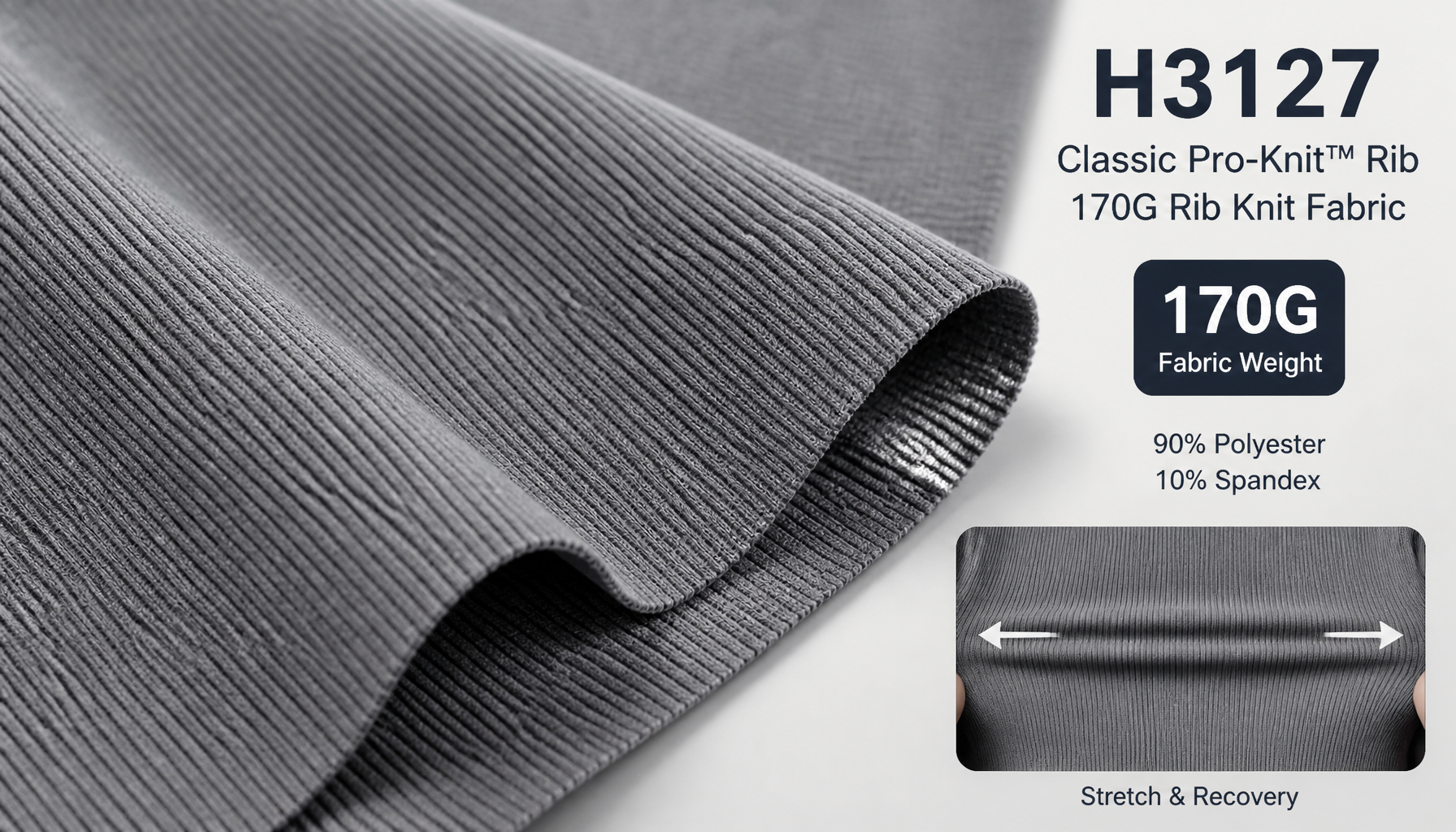
    Engineered Vertical Stripe Knit is an 80% nylon/20% spandex fabric specified at 170 GSM and 165 cm finished width. It can be considered for lightweight athletic panels requiring visible texture and stretch, but the specification does not by itself establish opacity, support, breathability, moisture management or recovery.

    Lightweight rib fabric reference for athletic wear

    Decide where the rib will be used

    Rib fabric may be used for a complete fitted top, waistband, cuff, side panel, or design insert. Each location creates a different requirement. A waistband needs controlled recovery and seam stability, while a body panel may prioritize drape, coverage, and comfort against the skin.

    Define the panel, expected extension, target fit, and adjacent materials before comparing swatches. A rib that performs well as trim can distort a large garment panel, and a body fabric may lack the recovery required for an opening or band.

    Interpret 170 GSM correctly

    GSM states mass per square metre; it does not state thickness, density, usable width, or garment yield. Yarn size, rib geometry, finishing, and relaxation affect how two 170 GSM fabrics feel and cover the body.

    Illustrative calculation — not ClothFactory production data: if a finished fabric is 170 g/m² and the assumed usable width is 1.50 m, 100 linear metres contain approximately:

    170 g/m² × 1.50 m × 100 m ÷ 1,000 = 25.5 kg

    The result changes with actual usable width and conditioned weight. Use verified finished measurements for costing rather than applying the example to an order.

    Test stretch, recovery, and coverage together

    Record stretch and recovery in both directions with the load or extension, hold time, recovery time, conditioning, and wash history stated. Inspect the rib relaxed and at the extension expected in the garment. Look for opening between ribs, loss of coverage, surface shine, and delayed recovery.

    Spandex content does not by itself define compression or support. Pattern reduction, seam construction, fabric force at garment extension, and body movement all affect the finished fit.

    Rib fabric application reference for performance apparel

    Control direction, surface, and seams

    Ribs make grain direction and panel rotation visible. Approve the face and direction, then assess whether marker rotation creates texture or shade mismatch. Sewing trials should check needle damage, skipped stitches, seam grin, puckering, and recovery after extension and laundering.

    If moisture, quick-dry, anti-odor, or cooling performance is required, specify it separately and request evidence for the finished fabric. Polyester content does not automatically prove those functions.

    Procurement next step

    Send the supplier the garment type, panel use, target composition, finished GSM and width, expected extension, color, care cycle, and required tests. Request an identified sample and enough yardage for marker, sewing, washing, and fit trials. Approve bulk against a sealed sample and written tolerances rather than the “170 GSM rib” description alone.

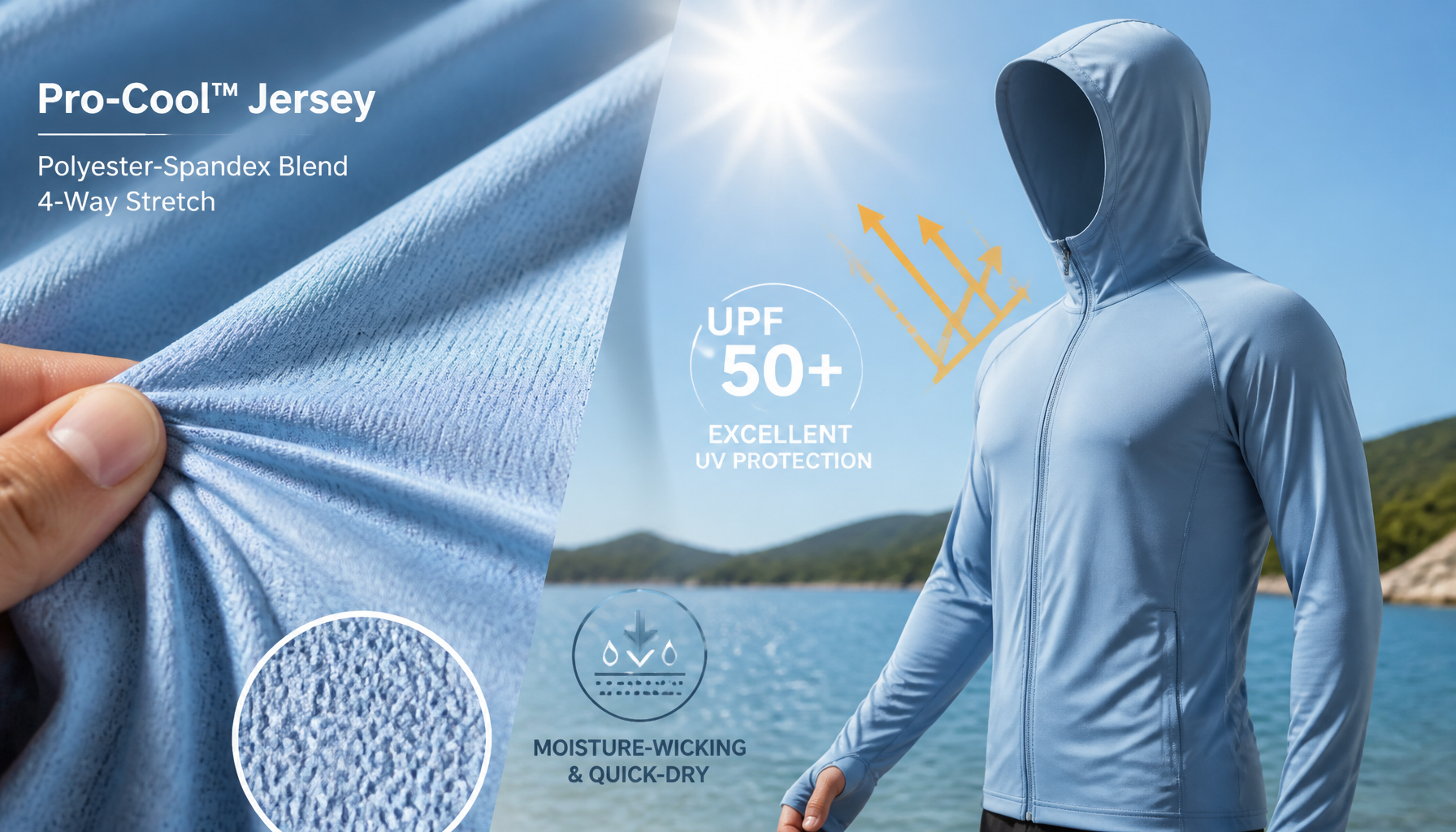
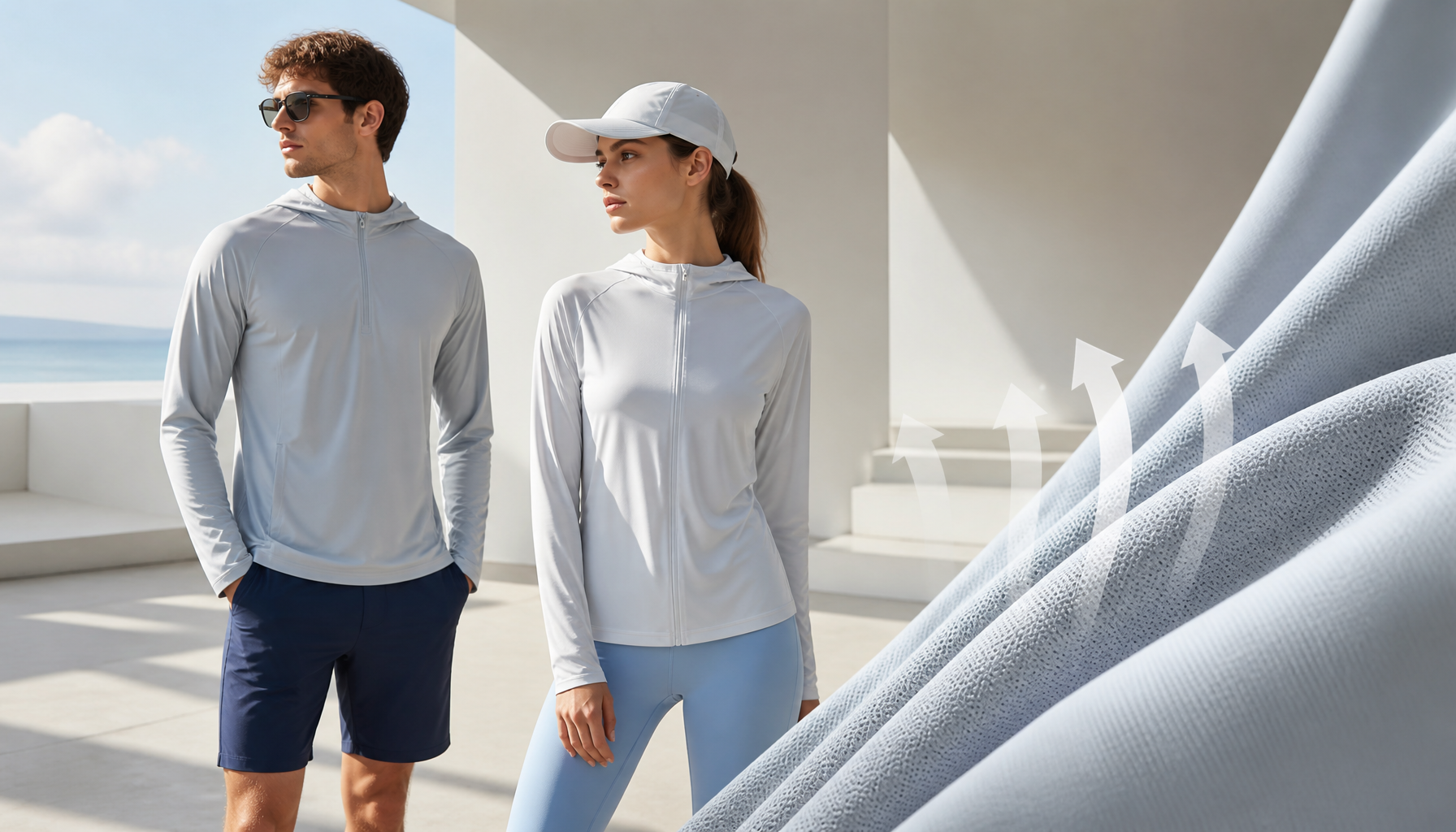
  • Ice-Silk Sun-Protection Jersey: UPF and Cooling Review

    Ice-Silk Sun-Protection Jersey: UPF and Cooling Review


    Ice-Silk Sun-Protection Jersey is an 86% nylon/14% spandex fabric specified at 175 GSM and 160 cm finished width. It should be described as UPF 50+ or cooling only when reports identify the exact finished construction, color, method and result; neither claim can be inferred from composition, jersey structure or product name.

    Jersey fabric reference for structured sun-protective apparel

    Verify the UPF claim at fabric and garment level

    Request the complete test report rather than a certificate image or summary statement. Confirm the laboratory, method, specimen identity, color, condition, and whether the reported value applies before or after washing. The fabric code and construction on the report should match the sample and quotation.

    Coverage can change when a knit is stretched. A result on relaxed fabric does not automatically represent a fitted sleeve, shoulder, or torso panel. Define the extension expected in the garment and decide whether testing or visual coverage assessment is required under that condition.

    Garment design also matters. Seams, mesh inserts, openings, and uncovered areas affect the protection delivered by the finished shirt even when the main fabric has a valid UPF result.

    Define what “cooling” means

    Cooling may describe initial contact sensation, moisture spreading, drying, air permeability, thermal resistance, or solar reflectance. These mechanisms are not interchangeable. Ask the supplier to connect the claim to a named measurement, test conditions, and an agreed acceptance criterion.

    If cooling depends on a finish, confirm whether the quoted result applies after the intended care cycle. If it depends on construction, compare thickness, density, air permeability, and coverage. A more open fabric may improve airflow while reducing UV protection under stretch, creating a tradeoff that must be resolved through testing.

    Sun-protective jersey application reference

    Evaluate structured-garment requirements

    For structured sun shirts, inspect plackets, collars, cuffs, pocket openings, and seams after washing. The body fabric may need reinforcement or a separate collar material. Stretch recovery, dimensional stability, seam puckering, and shade consistency should be approved alongside UV and cooling claims.

    Dark and light colors can produce different UV and thermal results. Do not extend a single-color report to every colorway without evidence or a color-validation plan. Dyeing and finishing can also alter hand and moisture behavior.

    Evidence buyers should request

    Claim or risk Required evidence
    UPF 50+ Full report identifying method, fabric, color, condition and result
    Cooling Defined property, method, conditioning and acceptance criterion
    Stretch coverage Result or assessment at the garment-relevant extension
    Wash durability Post-care-cycle UPF, cooling and dimensional results where claimed
    Production identity Composition, construction, finished GSM, width, finish and lot traceability

    Procurement next step

    Send the supplier the garment design, coverage zones, expected extension, color range, care label, target fabric weight and width, and exact claims planned for marketing. Request matched reports and identified finished samples, then produce and wash a garment sample. Do not approve the UPF 50+ or cooling wording until the evidence matches the fabric and use condition that will be sold.

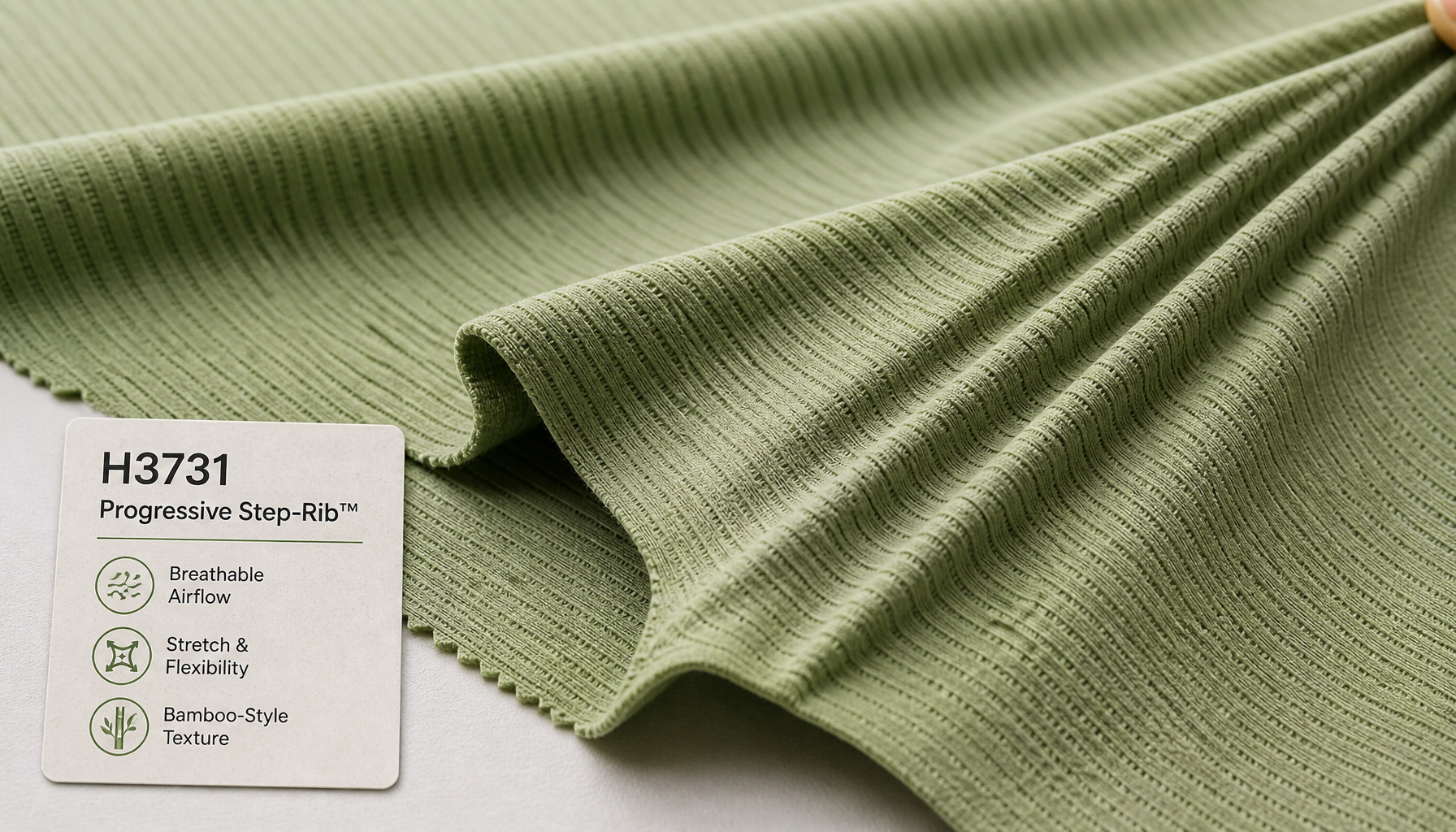
  • Progressive Step-Rib Fabric for Performance Apparel

    Progressive Step-Rib Fabric for Performance Apparel


    Progressive Step-Ribbed Knit is an 86.5% nylon/13.5% spandex fabric specified at 170 GSM and 165 cm finished width. Its stepped texture can provide visual depth in performance apparel, but “bamboo-style” describes appearance rather than fiber content or proven breathability; airflow, recovery and surface durability still require finished-fabric verification.

    Step-rib textured fabric reference for performance apparel

    Treat the texture name as a design description

    A bamboo-like or stepped surface does not mean the fabric contains bamboo fiber. The purchase specification should state the actual fiber composition and knit construction separately from the visual name.

    The raised and recessed areas may influence contact with the skin, drape, moisture spreading, and surface reflection. Their effect depends on yarn, loop density, thickness, finishing, and garment fit. Ask for measured results if the product brief includes ventilation, cooling, or quick-dry claims.

    Match the structure to the garment panel

    A textured fabric used across an entire legging behaves differently from the same fabric used as a ventilation panel in a training top. Full-garment use requires consistent recovery, coverage, and surface appearance over large areas. Zoned use adds seam compatibility and differential-stretch risk where two materials meet.

    During sampling, compare the step-rib candidate with adjacent fabrics at the extension expected in the garment. Check seam waviness, panel distortion, hand transition, and recovery after wear simulation and laundering.

    Measure breathability under defined conditions

    Visual gaps or raised texture are not a substitute for air-permeability data. Record the test method, pressure differential, conditioning, specimen orientation, and result for the finished fabric. If moisture behavior is relevant, assess spreading and drying separately; air flow and drying are not the same property.

    Step-rib fabric application reference for activewear

    Control texture direction and cutting yield

    Step-rib direction can affect appearance and stretch. Mark the approved face and grain direction, then test whether rotating pattern pieces produces visible mismatch. If panel direction must remain fixed, include that restriction in marker planning and costing.

    Request finished usable width, edge allowance, shrinkage, and any repeat dimension. Cost per kilogram alone cannot show the effect of directional cutting, edge loss, or surface defects on accepted garment yield.

    Sample-review checklist

    • confirm actual composition, construction, finished GSM and usable width;
    • record stretch and recovery by direction before and after the care cycle;
    • inspect texture relaxed and at garment-relevant extension;
    • test air permeability or moisture behavior only when the product brief requires it;
    • assess pilling, snagging and abrasion on raised areas;
    • sew the fabric alone and against any adjoining panel material;
    • approve shade, face, direction and permitted surface variation.

    Procurement next step

    Send the supplier the garment type, panel location, expected extension, target weight and width, texture direction, color, care cycle, and required airflow or durability tests. Request identified samples and sufficient continuous fabric for marker, sewing, washing, and garment-fit trials before approving bulk production.

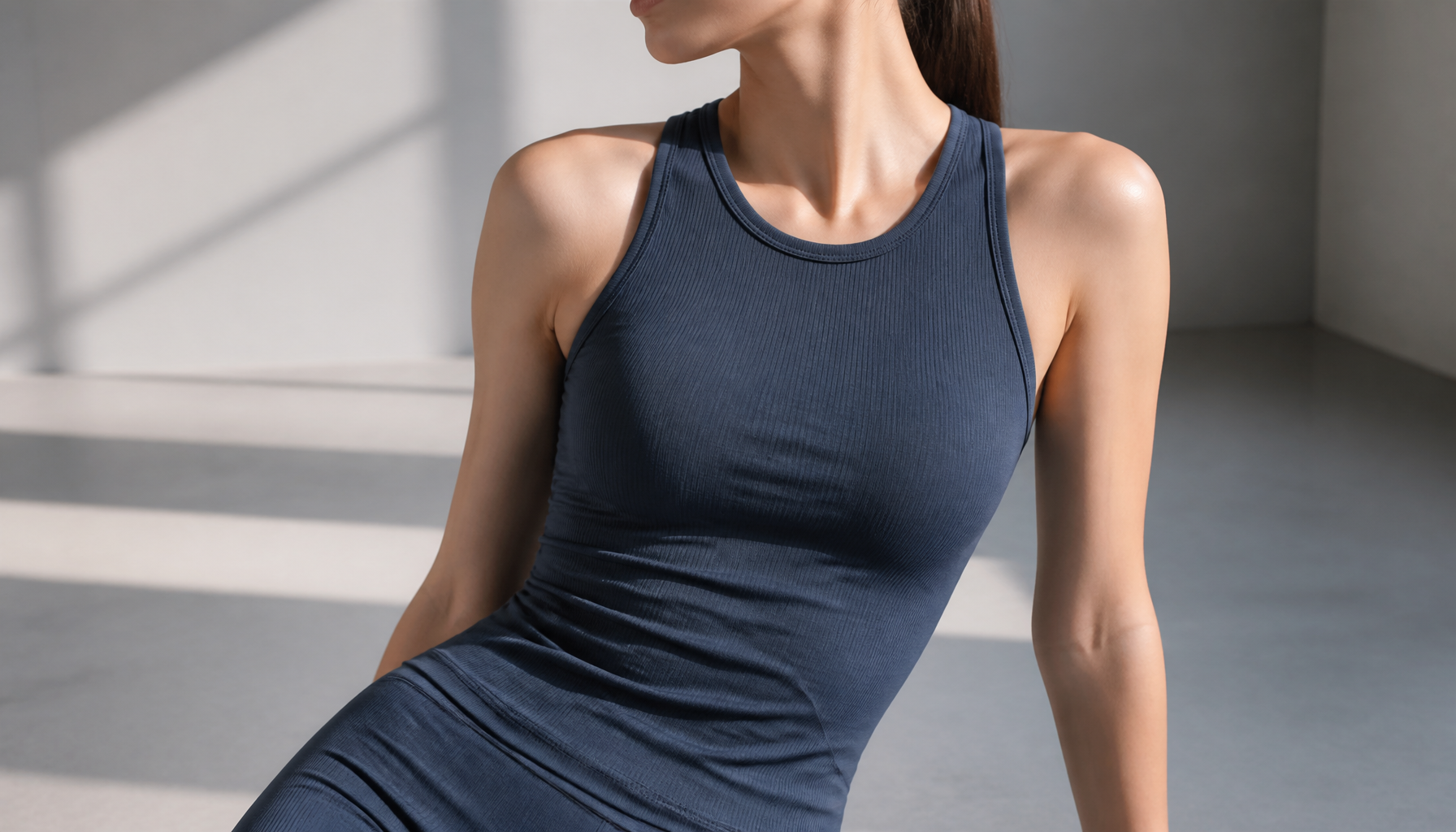
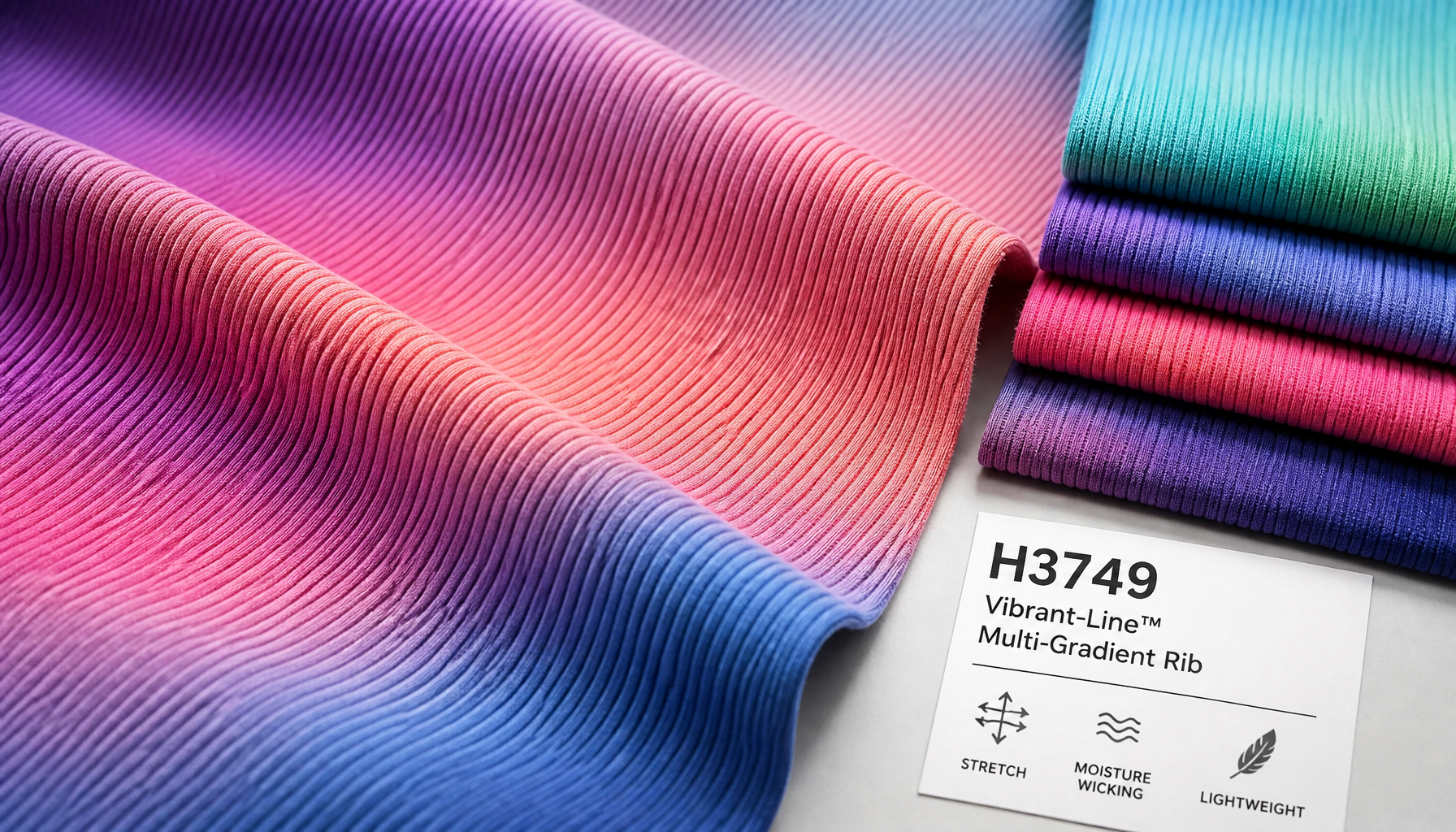
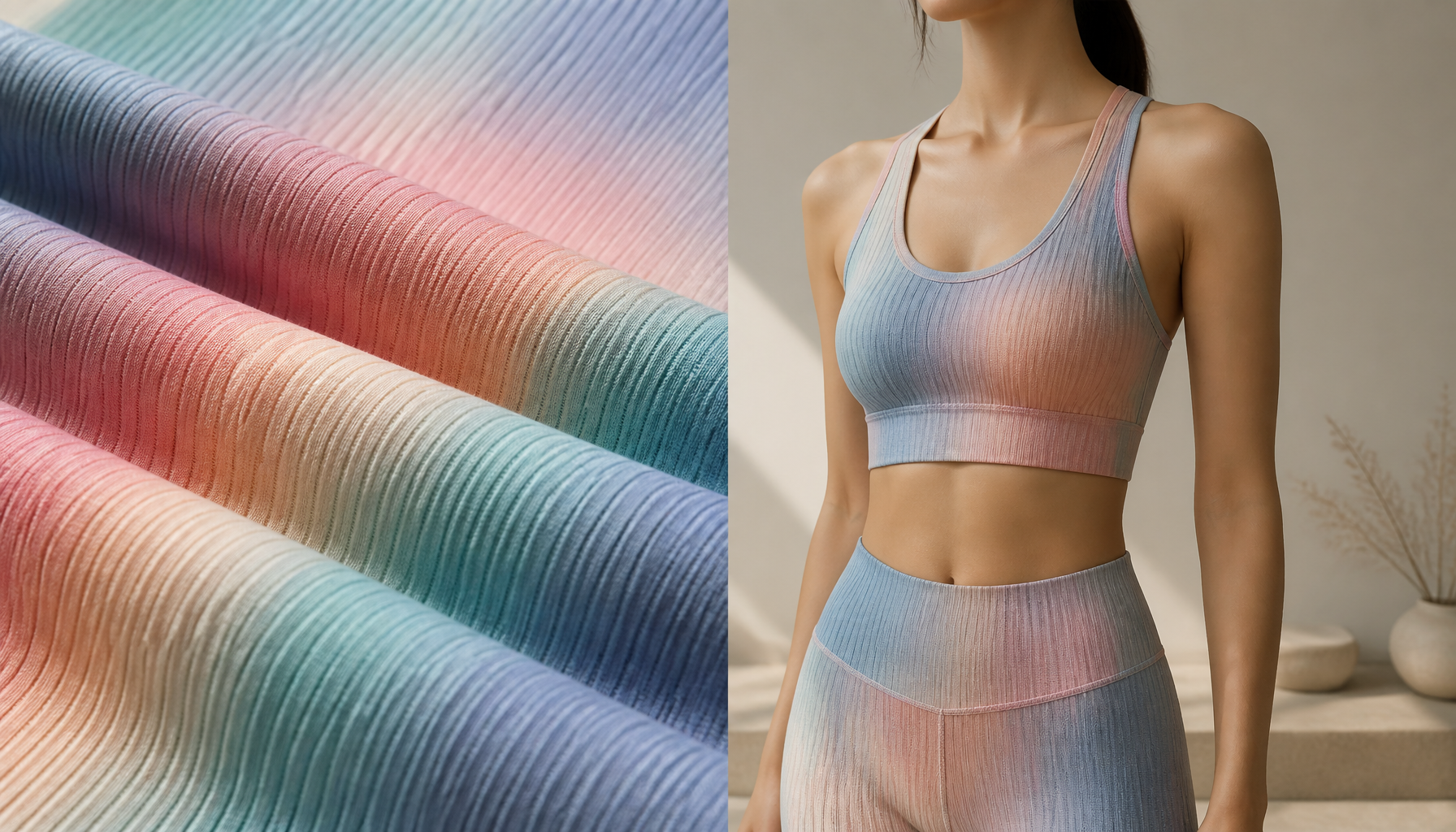
  • Multi-Gradient Stripe Fabric for Women’s Training Wear

    Multi-Gradient Stripe Fabric for Women’s Training Wear


    Engineered Multi-Gradient Stripe is a 77% nylon/23% spandex fabric specified at 160 GSM and 165 cm finished width. Its texture and color transition can differentiate women’s training wear, but buyers should confirm repeat length, shade continuity, panel placement, stretch recovery and appearance under extension before costing or approval.

    Multi-gradient rib fabric reference for training wear

    Decide whether the gradient is engineered or variable

    Before costing, ask how the color transition is produced and repeated across the fabric. The buyer needs the repeat direction, repeat length, usable width, edge allowance, and permitted variation within and between rolls. Without these values, the design team cannot predict where a gradient will appear on a sports bra, legging leg, waistband, or matched set.

    If the gradient position is allowed to vary, approve that variation deliberately. If matched placement is required, expect lower marker efficiency and additional cutting control. This is a commercial tradeoff: tighter visual matching can increase fabric consumption and panel rejection.

    Review the rib under garment extension

    Rib texture can change when stretched. Inspect the sample relaxed and at the extension expected in the garment zone. Check whether color gaps widen, the base becomes visible, ribs distort, or the surface develops unwanted shine.

    Stretch and recovery should be recorded in both directions with the extension, hold time, recovery time, and wash history stated. Spandex content or a rib description alone cannot establish support or shape retention.

    Plan panel orientation before bulk approval

    Use a full-width sample or production-length trial to place actual pattern pieces. Small hand swatches cannot show repeat utilization or left-right leg matching. Confirm whether panels may be rotated, whether mirrored placement is required, and how size grading changes the visible gradient.

    Gradient rib fabric application reference for women’s activewear

    Establish color and surface acceptance

    Approve the gradient in the lighting used for design review and inspect it again under retail-relevant lighting. Record acceptable shade change, banding, barre, streaks, and roll-to-roll variation. Because dye appearance can change with extension and finishing, evaluate both relaxed fabric and a fitted garment sample.

    Wash the sample according to the intended care label, then check shade migration, colorfastness, rib definition, dimensional stability, pilling, and recovery. Do not treat one approved colorway as evidence that every color combination will behave identically.

    Request information for comparable costing

    The quotation should include finished GSM, usable width, repeat dimensions, expected matching allowance, minimum cuttable length, and any restrictions on roll sequence. Compare cost per accepted garment rather than price per kilogram alone; repeat waste and shade sorting can outweigh a lower fabric price.

    Procurement next step

    Provide the supplier with garment drawings, panel dimensions, desired gradient placement, size range, expected extension, color standard, care cycle, and acceptance limits. Request a full-width sample and enough continuous length for marker, sewing, wash, and matched-set trials. Approve bulk only after the repeat and variation rules are written into the specification.